
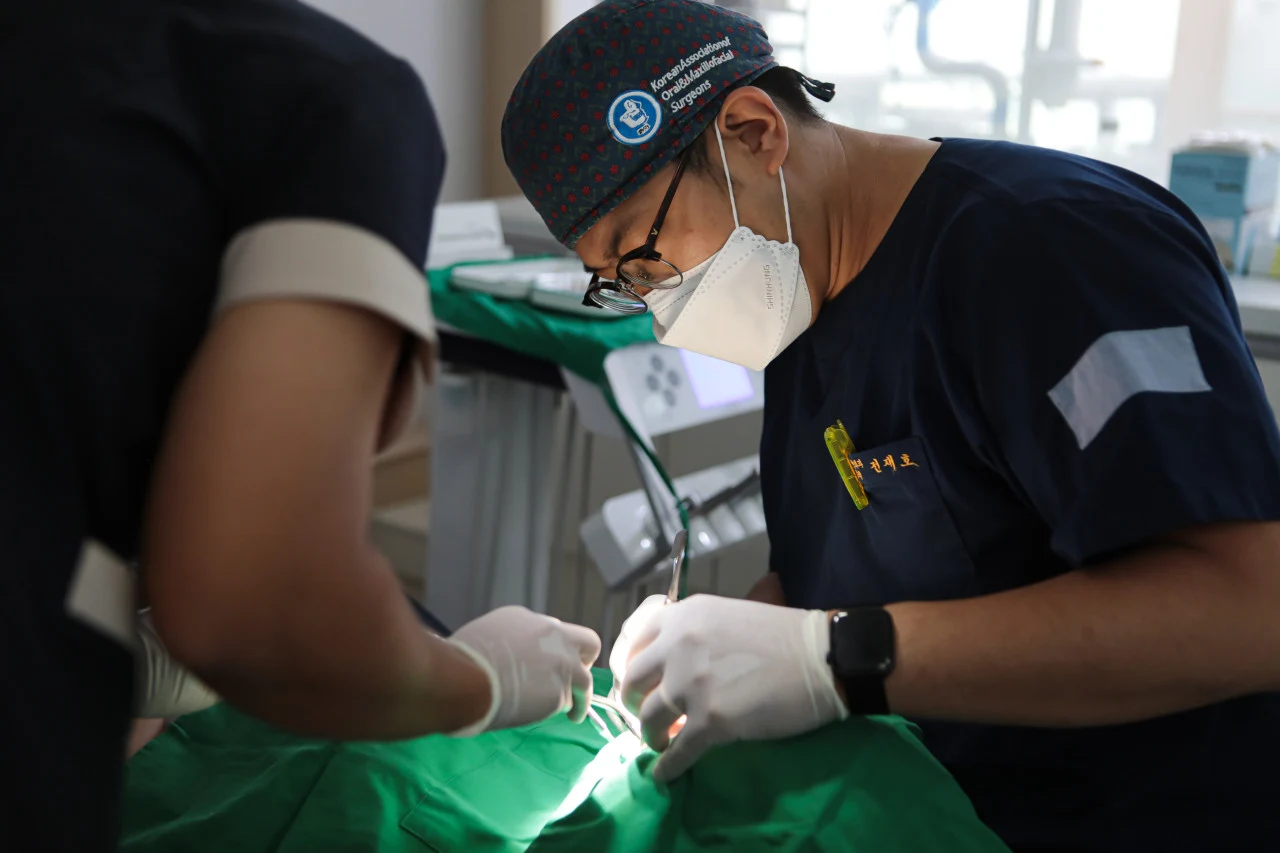
Hello, I'm Dr. Jaeho Jeon, Director and Oral & Maxillofacial Surgeon at ARC Dental Clinic.
Lately, I've been seeing a significant increase in patients coming in with jaw pain, difficulty opening their mouth, or that characteristic clicking sound in the jaw.
What's interesting is that most of them don't walk in and say, "I'd like TMJ treatment." Far more often, it comes up like this — at the very end of another appointment, almost as an afterthought.
"Doctor... actually, could you take a look at my jaw too?"
Every now and then in clinical practice, I get a clear sense that times have changed. Not so long ago, most patients would simply leave after a wisdom tooth extraction or an implant consultation. But these days, as we wrap up, I regularly hear something like this.
"Doctor..." A brief pause. "I've been uncomfortable for a while — would you mind checking my jaw too?"
They say it quietly, almost hesitantly, as though sharing a secret. And honestly, it happens more often than you'd expect. Whether it's a consultation for implants, the end of a wisdom tooth removal, or a routine checkup — sooner or later, the jaw comes up.
Why are so many people dealing with TMJ issues these days?

Has the jaw itself become weaker? Probably not. But our daily lives have changed enormously. We spend our mornings staring at screens, our evenings scrolling through our phones, and even fall asleep with a device in hand. When we're deep in concentration, we clench without realizing it. When we're stressed, tension travels straight to the jaw. And at night, many of us grind.
What's remarkable is that most people have no idea this is happening. They wake up thinking, "Why does my jaw feel so stiff today?" — but they have no idea how hard it was working through the night. The owner was asleep, but the jaw was putting in overtime.
The jaw is a joint that never really gets a day off

People are often surprised to hear how busy the jaw actually is. We move it thousands of times each day — yawning in the morning, sipping coffee, chewing lunch, talking through meetings, laughing, eating dinner, and yes, late-night snacks. The jaw never truly rests.
Add to that a habit of chewing tough foods, always chewing on one side, clenching under stress, or grinding at night — and the jaw joint and masticatory muscles gradually accumulate fatigue. The trouble is that this doesn't happen overnight. It's months or years of repeated habits that suddenly appear, one day, as pain.
Where should you go when your jaw hurts?
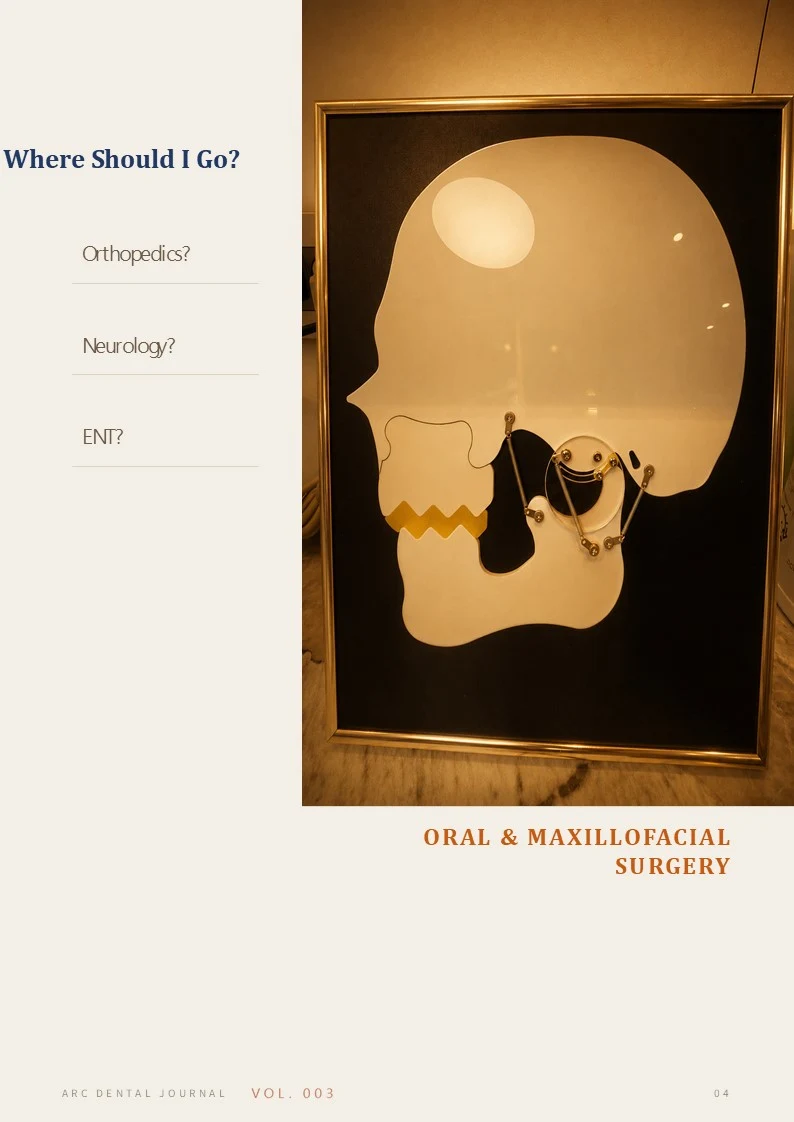
Shoulder pain? Orthopedics. Eye problems? Ophthalmology. Ear trouble? ENT. But when it's the jaw — many patients genuinely don't know where to turn. It's quite common for someone to visit several different specialists before finally finding their way to an Oral & Maxillofacial Surgeon.
TMJ disorders aren't simply about one joint. They often involve occlusion (how the teeth bite together), tension in the masticatory muscles, jaw movement patterns, lifestyle habits, clenching, and grinding — all at once. That's why an Oral & Maxillofacial Surgeon or an Oral Medicine specialist is often best placed to assess and manage these cases comprehensively.
A patient I still think about
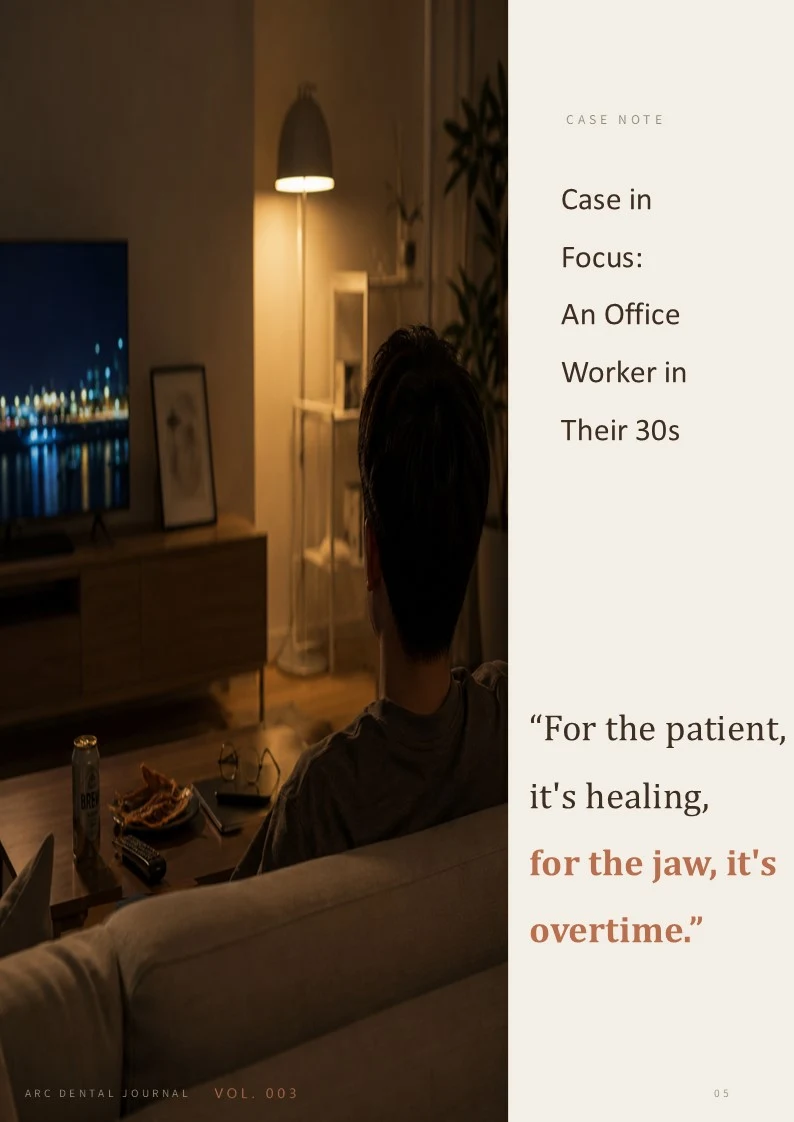
There's one patient I haven't forgotten. A professional in their early 30s. When they first came in, they could only open their mouth about two finger-widths. They couldn't take a proper bite out of a burger, yawning was a struggle, and talking for extended periods — which their job required — was genuinely painful.
Initially, they had attributed it to neck muscle problems and visited an orthopedic clinic. The feeling of ear fullness had taken them to an ENT. Medications came and went, but the symptoms persisted. Eventually, the thought arose: "Could this actually be my jaw?"
On examination, the causes were multiple. The jaw joint's range of motion was restricted, the masticatory muscles were severely tight, and there was a habitual clenching pattern. Long hours and significant work stress added to the picture. As we talked, they mentioned that their one daily pleasure was unwinding after work with a cold beer and dried squid.
A great combination — until you think about what dried squid does to an already overworked jaw. What felt like the perfect way to decompress was, from the jaw's perspective, simply more overtime.
TMJ treatment rarely comes down to just one thing

Managing TMJ disorders takes time, and rarely involves a single solution. Physical therapy, muscle relaxation techniques, habit correction, and lifestyle modifications are often part of the process. When indicated, Botox injections or occlusal splints (nightguards) may be added. The most important thing is not to chase a single treatment, but to understand why the jaw has been under strain in the first place — and to address it at the root.
The jaw sends small signals first
It almost always starts this way.
- A clicking or popping sound in the jaw
- Difficulty opening the mouth as wide as before
- Morning stiffness in the jaw
- Fatigue in the jaw after chewing for a while
But when those signals are ignored for months — sometimes years — it can progress to real difficulty eating, or a jaw that simply won't open properly. People rush to the mechanic the moment their car makes a strange sound, yet tolerate years of jaw clicking without a second thought.
The jaw doesn't break down overnight. In most cases, it's years of small, repeated habits finally saying: "Please. Give me some rest."
Are you experiencing any of the following?
- ✔ Clicking or popping sounds in your jaw?
- ✔ Difficulty opening your mouth fully?
- ✔ Stiffness or soreness in the jaw each morning?
- ✔ A habit of clenching your teeth or grinding at night?
If any of these sound familiar, please don't wait it out much longer. A proper assessment can make a real difference. The jaw is a joint you'll be relying on for the rest of your life.
I hope we can all give our jaws a little less overtime.
This is Dr. Jaeho Jeon, Oral & Maxillofacial Surgeon and Visiting Professor at Seoul National University School of Dentistry — practicing near Gwanghwamun, Seoul.