Hello.
I am Dr. Jaeho Jeon, an Oral & Maxillofacial Surgeon at ARC Dental Clinic, located near Gwanghwamun, Seoul City Hall, Jongno, Euljiro, Myeongdong, and Cheonggyecheon. I am a board-certified Oral & Maxillofacial Surgeon trained at Seoul National University, and I also serve as a visiting professor at Seoul National University Dental Hospital.
The weather has been quite hot lately. Still, I would like to sincerely thank all of our patients who continue to visit us at ARC Dental Clinic despite the heat.
There are many reasons why patients come to our clinic. Some come because they were told by a general dentist that their wisdom tooth extraction would be difficult. Others come for implant revision surgery after multiple treatments elsewhere. Some patients visit because a toothache suddenly flared up near their workplace, while others come seeking treatment for jaw joint pain, more natural-looking veneers, or even a quick teeth whitening session during their lunch break.
However, I have noticed a particularly sharp increase in one type of patient over the past few days.
"Doctor, I feel something on my gums. It doesn't hurt, but my tongue keeps touching it."
The way patients describe it varies slightly:
"I feel something round on my gums."
"There is something like a pimple inside my mouth that won't go away."
"Could it be something serious?"
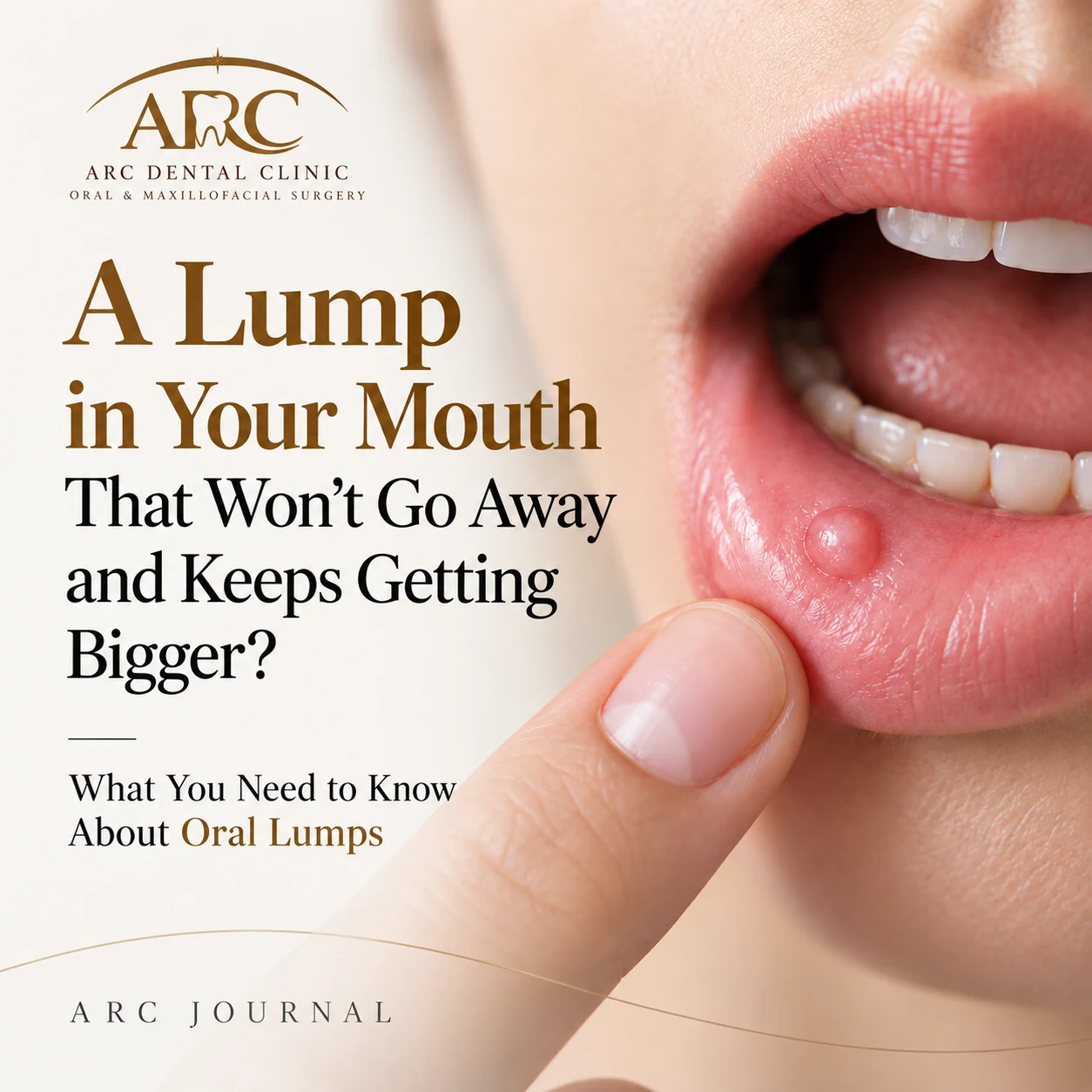
Honestly, even a small new growth inside the mouth can be quite worrisome. It is a place you rarely look at in the mirror, but once you notice it, your tongue somehow keeps gravitating toward it. It doesn't hurt, yet you keep touching it. It feels somewhat raised, and when it doesn't disappear after several days, anxiety starts to creep in.
Especially when you search for terms like "gum bump," "gum cyst," or "gingival cyst" on the internet, the results can be quite alarming, and this often leads patients to visit us in worry.
However, not all bumps on the gums are the same condition. Some may be related to inflammation around the root of a tooth, some may be cysts that developed within the gums or jawbone, and in some cases, they may need to be differentiated from other oral lesions. This is why quite a few patients seek an Oral & Maxillofacial Surgeon rather than a general dentist.
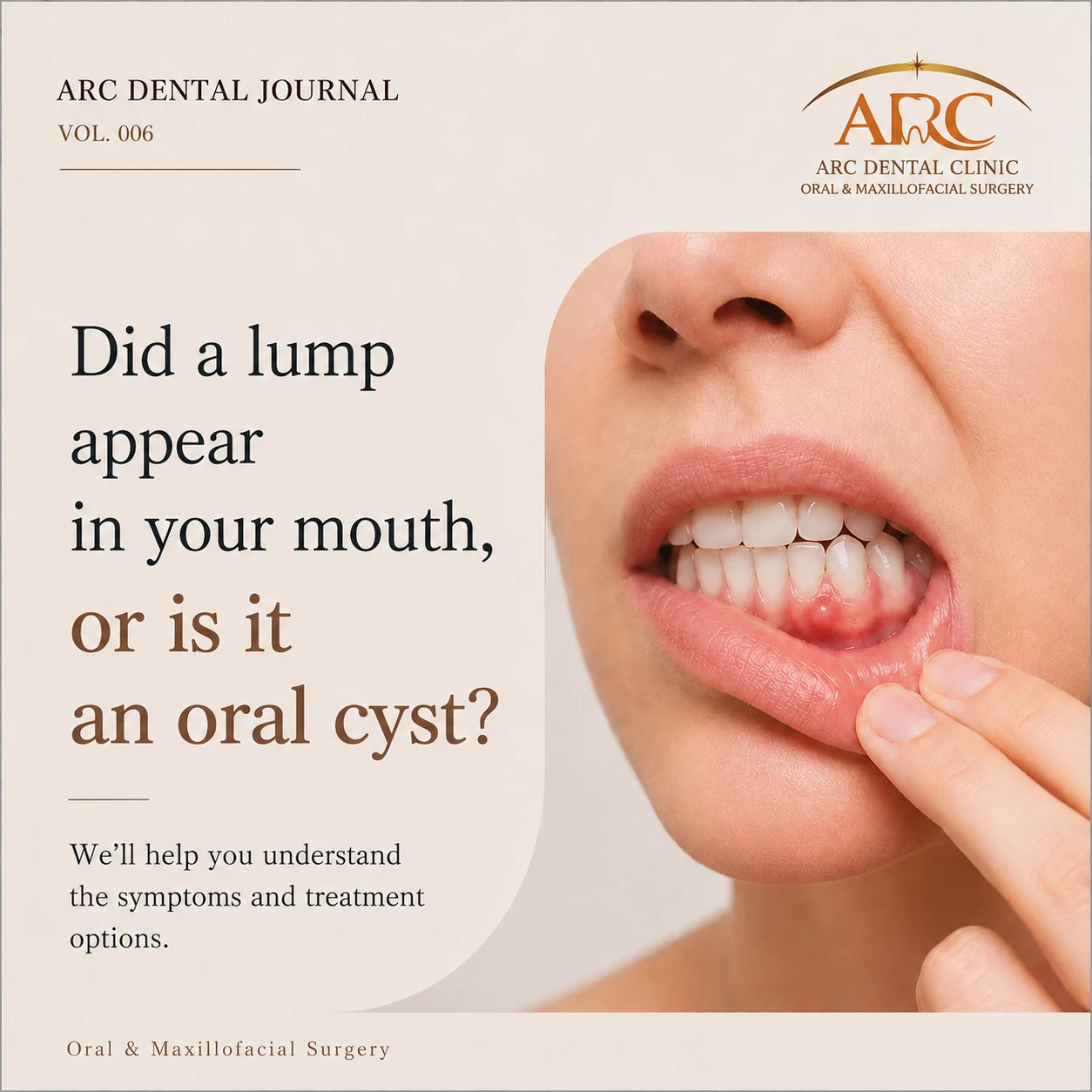
Not long ago, a patient visited us concerned about a bump on the gums. At first, they thought the gum was simply swollen. But no matter how thoroughly they brushed, it remained unchanged. Several days passed, and it still did not go away. In fact, it seemed to be growing larger, and worry began to set in.
They eventually turned to the internet, searching for "gum bump," "gingival cyst," "gum cancer," and "oral cancer." And from that moment, anxiety truly took hold.
"Could it be cancer?"
"Will I need surgery?"
"Should I go to a university hospital?"
In fact, there are many more patients like this than you might think. What is remarkable is that most of them arrive at our clinic through a similar process. They search the internet, discover the field of Oral & Maxillofacial Surgery, and decide to visit us for an accurate diagnosis, even if it takes a bit of time to travel here.
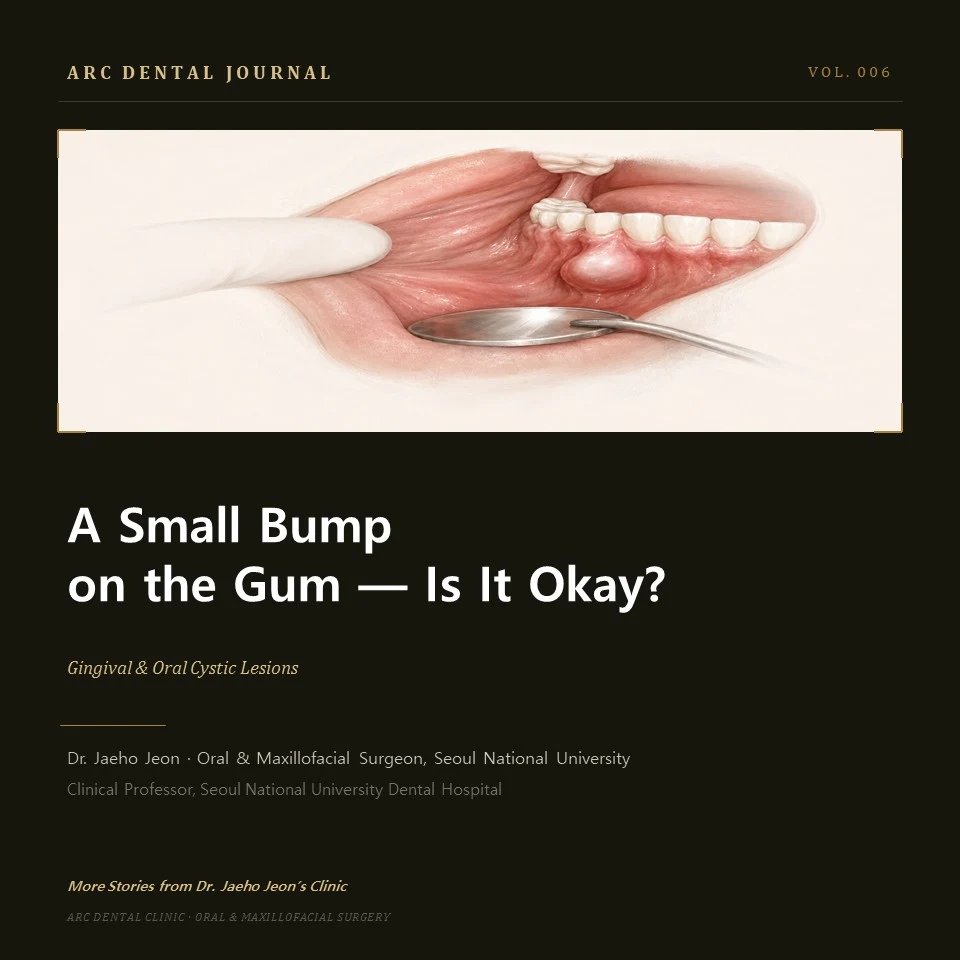
① What is a gingival cyst?
First, the word "cyst" may sound intimidating. Simply put, it is a pouch-like lesion that may contain fluid or semi-solid material.
However, there is one important point to clarify. When patients see or feel a round bump on the gums, they often say, "I think I have a gingival cyst." But not every bump on the gums is a cyst that originated from the gum tissue itself.
Oral cysts are more diverse than you might think in terms of location and cause. Some are found in soft tissue such as the gums, while others develop around teeth or deep within the jawbone. In particular, if a lesion that started inside the jawbone grows and expands the surrounding bone, patients may perceive it as "a bump protruding from the gum" or "something raised on the gum."
Therefore, you cannot simply assume "a bump on the gum = gingival cyst." Even though they may look similar on the surface, the diagnosis and treatment can differ greatly depending on where the lesion actually originated.
That is why in Oral & Maxillofacial Surgery, we do not look only at the visible bump.
\n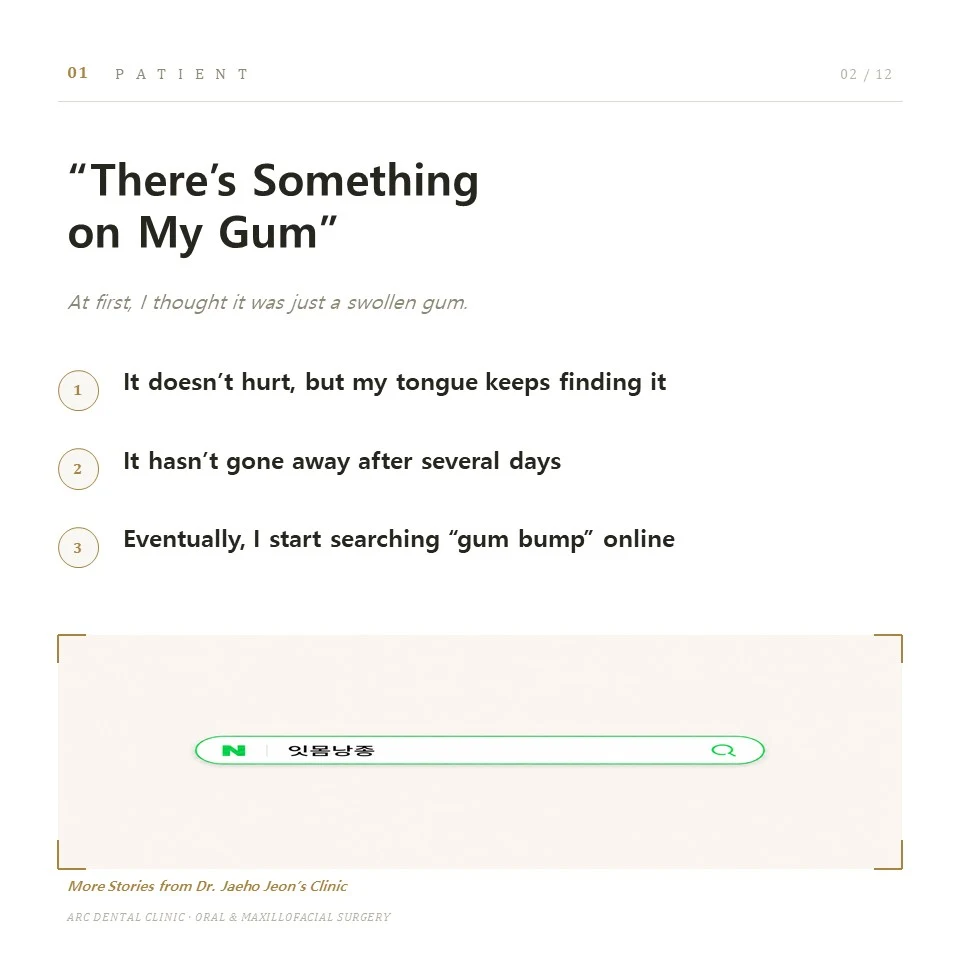
We examine whether it started from the gum itself, whether it is related to a tooth, or whether it is a lesion that originated from the jawbone beneath.
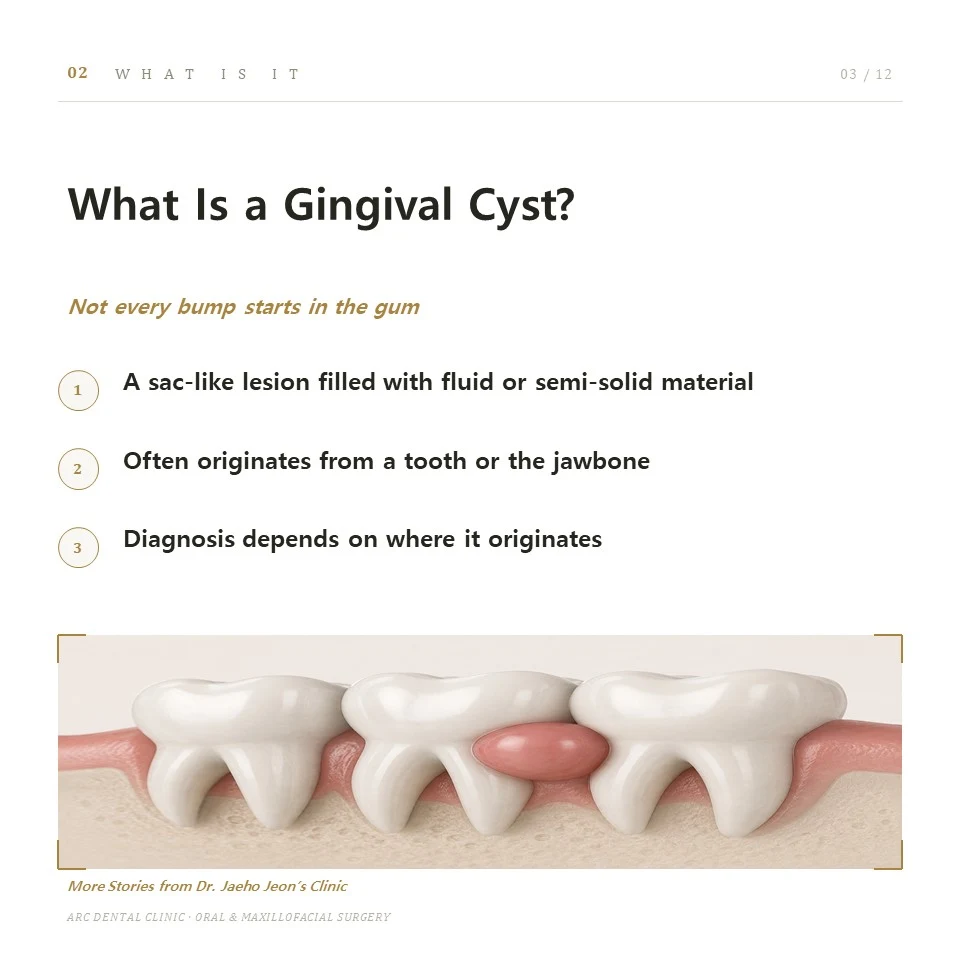
1. What kinds of cysts occur in the oral cavity?
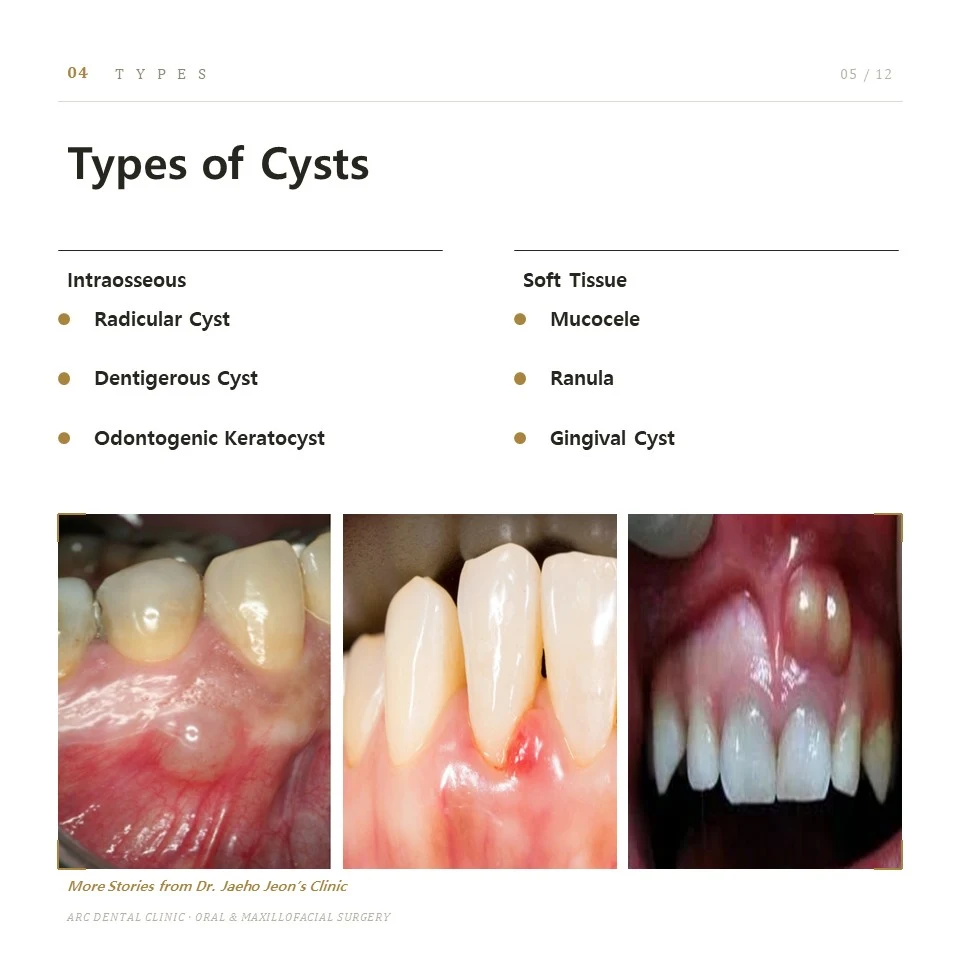
Oral cysts are actually more varied than you might expect. The bumps patients commonly refer to as "gingival cysts" are not all the same type. The names become quite technical when you go into detail, so let me simplify and categorize them by where they occur.
Broadly speaking, there are cysts that develop inside the jawbone, and cystic lesions found in soft oral tissues such as the gums.
First, inside the jawbone, there are radicular cysts related to inflammation at the root tip, dental follicular cysts that can form around impacted teeth or wisdom teeth, and odontogenic keratocysts that require careful treatment and follow-up due to their recurrence potential. These lesions are often discovered through panoramic X-rays or CT scans because they develop inside the bone.
On the other hand, there are also cystic lesions found in soft tissues such as the gums, lips, inner cheeks, and under the tongue. Representative examples include mucoceles commonly seen on the lips, ranulas related to salivary glands under the tongue, and gingival cysts that develop on the gums.
The approach here is somewhat different.
\n
Rather than relying solely on panoramic X-rays or CT, direct intraoral examination — looking with the eye and sometimes palpating — is often more important.
Radicular cysts, dental follicular cysts, gingival cysts... The names alone are already quite complex. However, patients do not need to study and differentiate each one themselves. That is our job. So rather than spending too much time searching for disease names online, it is enough to simply know: "Something new has appeared in my mouth that wasn't there before."
2. Why do gingival cysts form?
This is one of the most common questions I hear during consultations.
"Doctor, I brush my teeth diligently. Why did this happen?"
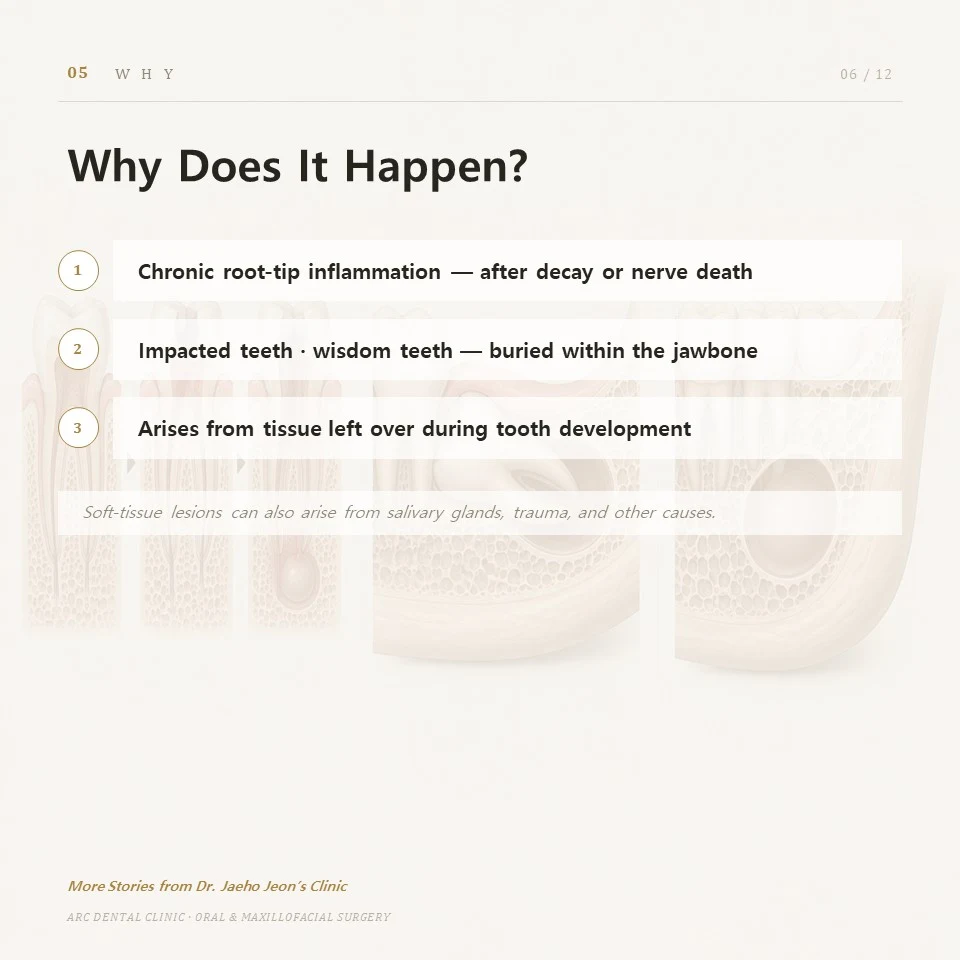
The truth is, a gingival cyst is not simply caused by poor brushing. One of the most common causes is persistent inflammation at the tip of a tooth root.
When tooth decay progresses deeply and infects or necroses the dental nerve, inflammation gradually spreads from the root tip, transforming into a fluid-filled cyst that destroys surrounding alveolar bone and continues to grow. Of course, not all gingival cysts form this way. Some are related to wisdom teeth, some are associated with tooth development, and various types exist depending on cause and location.
Ultimately, what matters is not the label "gingival cyst" alone, but accurately diagnosing why it formed. Because even among cysts, some may require root canal treatment, some may need cyst removal surgery, and some may require a biopsy.
3. What are the symptoms of oral cysts?
During consultations, patients are often surprised by one thing.
"Doctor, shouldn't a cyst hurt?"
Not necessarily. Depending on the type and location of an oral cyst, symptoms vary, and in the early stages, it may be discovered without any particular pain.
"I noticed it by chance while brushing my teeth."
"I felt something round with my tongue."
"It doesn't hurt, but it bothers me because it keeps getting in the way."
Many patients visit for these reasons. Even a small lesion on the gum or soft oral tissue can feel quite large to the tongue. Once you notice it, your tongue keeps returning to that spot — in the morning, while eating, before going to sleep. It doesn't hurt, but its presence is unmistakable.
The changes patients may notice include:
- A round bump or raised area on the gum that wasn't there before
- A feeling that the size is gradually increasing
- Recurrent swelling in the same area
- Discomfort or a dull pressure sensation when pressed
- Pain, pus, or discharge if inflammation develops
- Discomfort in surrounding teeth or gums
Conversely, cysts that develop inside the jawbone often show no visible or palpable symptoms on the surface, and are sometimes discovered incidentally during panoramic X-rays or CT scans at the dental clinic.
Here is one thing to remember: "Not hurting" does not mean "everything is fine." And at the same time, a bump on the gum does not automatically mean a cyst or a serious condition. What matters is not judging based on pain alone. If a new bump appears, does not go away, changes in size, or the same area swells repeatedly, it is worth having it examined.
Especially if your tongue is diligently checking that same spot every day, it may be time to stop relying solely on your tongue and let a professional take a look. :)
4. Do gingival cysts always require surgical removal?
This is probably the question most readers are curious about.
"Doctor, so do I have to get this removed?"
To answer directly: not all bumps or cystic lesions on the gums require surgical removal. Because oral cysts are diverse in their actual location and cause.
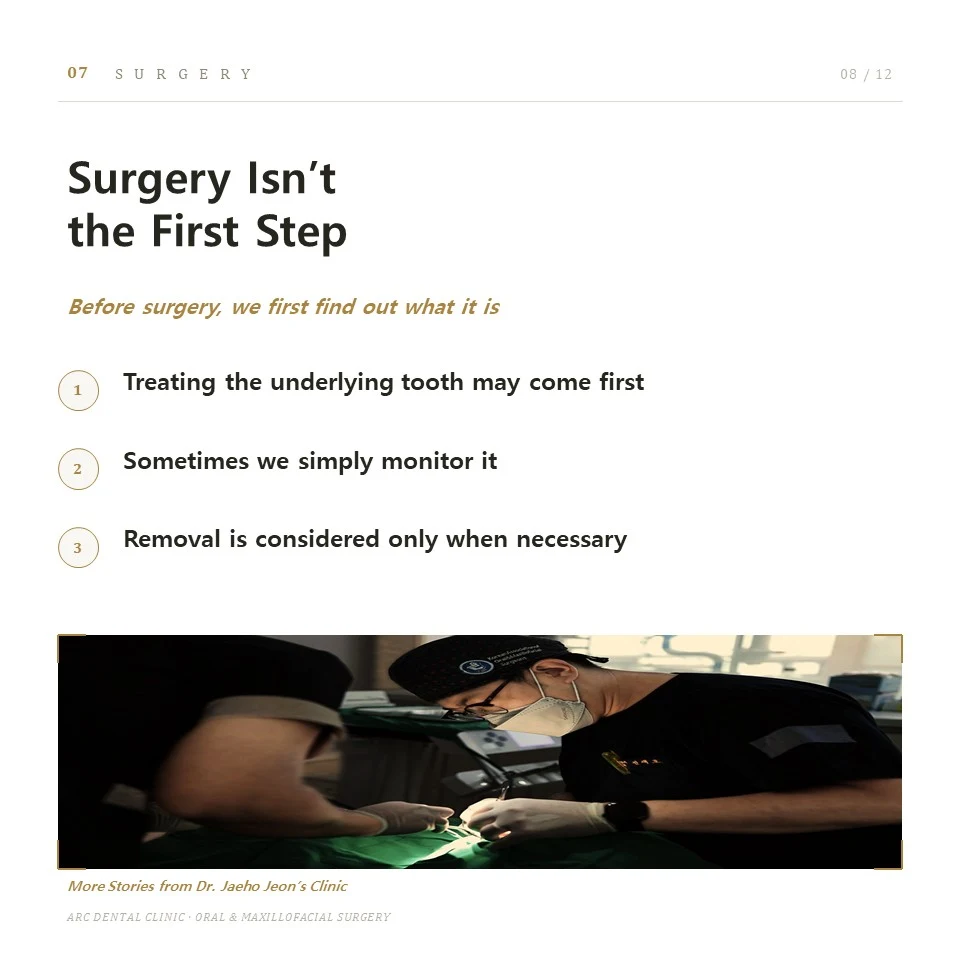
That is why, before deciding whether surgery is needed, I first confirm "what this is." For example, if it is a lesion related to inflammation at a tooth root tip, treating the causative tooth may take priority. Root canal treatment may be performed first, and then the lesion is monitored for changes.
On the other hand, if a cyst inside the jawbone is large, continuously growing, or affecting surrounding bone and teeth, surgical removal may be necessary. Similarly, lesions found in soft tissue such as the gums or lips are assessed based on type, size, and changes. Some may simply be observed, while others are removed and sent for biopsy to confirm exactly what they are.
In the clinic, I also frequently hear this:
"Doctor, it doesn't hurt, but it keeps bothering my tongue and it is so annoying."
It may seem minor, but for the patient, it can be a significant discomfort. Because a lesion inside the mouth is constantly touched by the tongue, it can be on your mind several times a day. In such cases, after confirming the type, location, and size of the lesion, surgical removal may also be considered.
Some patients may need dental treatment first, some may be monitored, and some may need removal and biopsy. Whether surgery is needed is not determined by searching for a disease name online, but by first identifying the true nature of the lesion.
So please don't worry too much about the word "surgery" from the start.
\n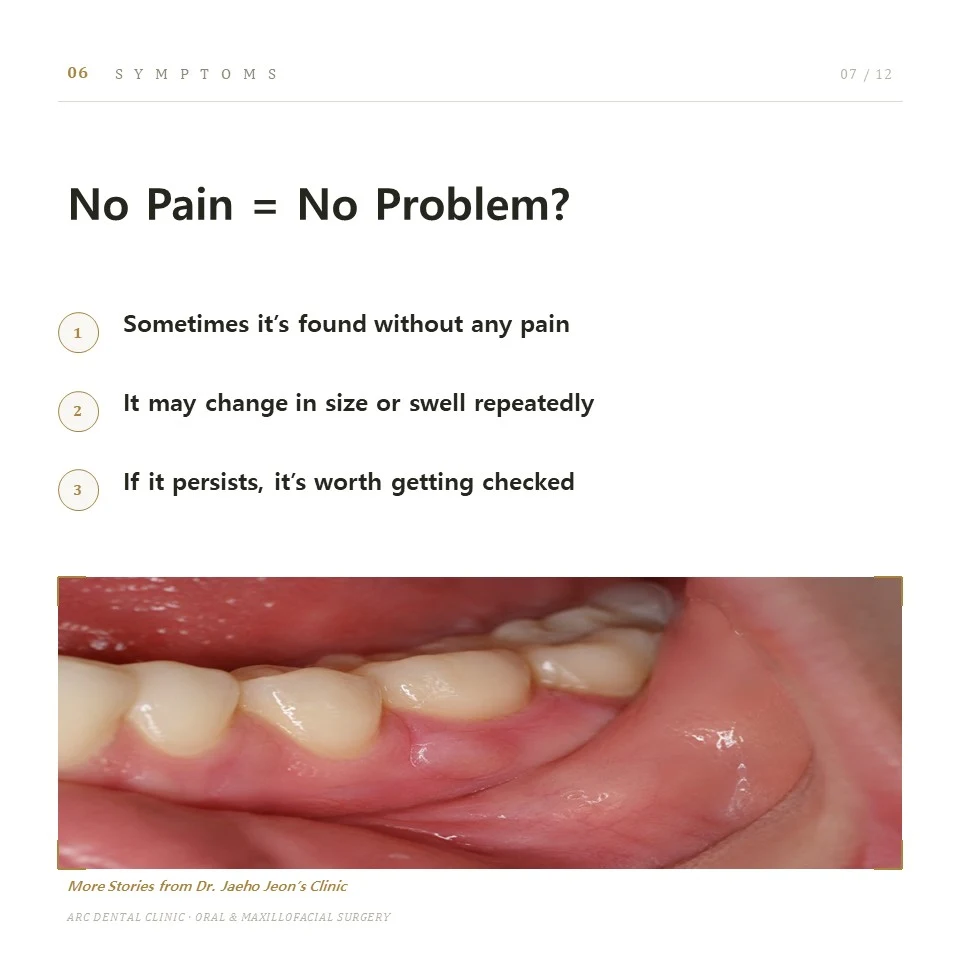
First, let us examine it, perform any necessary tests, and then determine the most appropriate treatment.
5. Why do patients come to ARC Dental Clinic?
Perhaps because it is a growth inside the mouth, patients feel that "it should be properly checked by an Oral & Maxillofacial Surgeon."
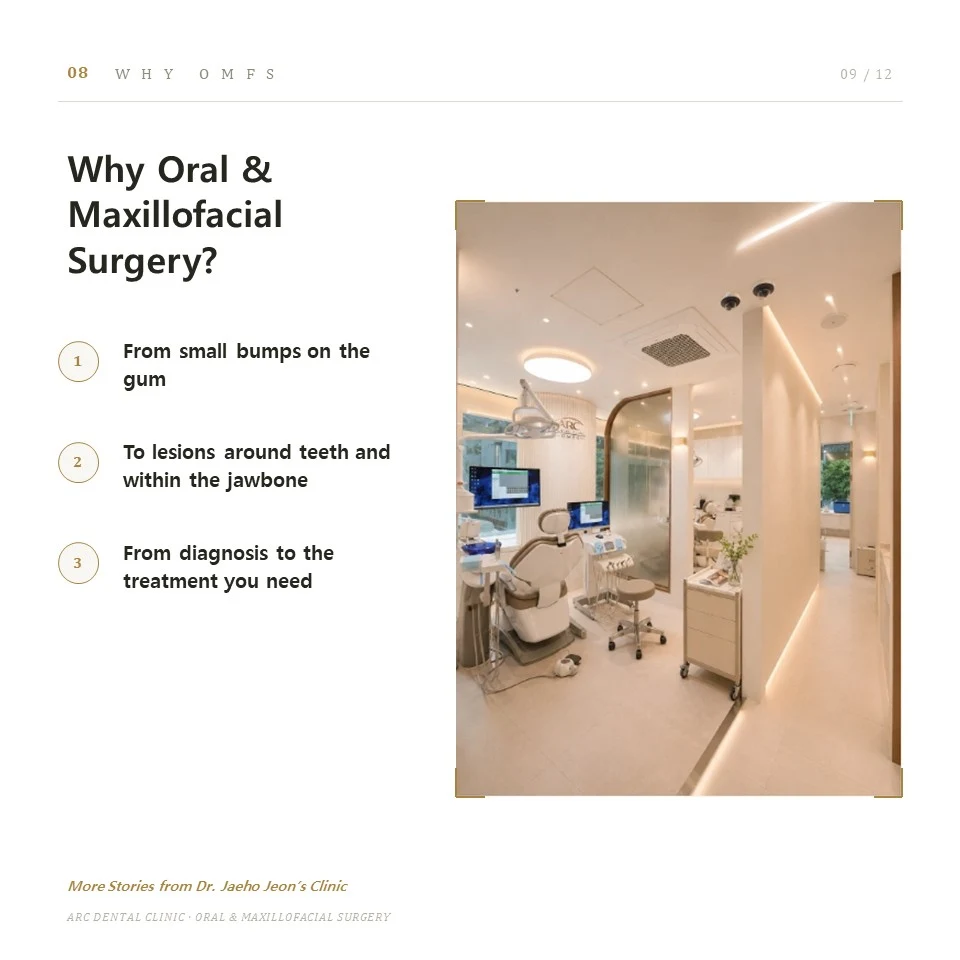
Indeed, Oral & Maxillofacial Surgery covers not only difficult wisdom tooth extractions and implant surgery, but also cysts and tumors in the gums and oral cavity, as well as various lesions in the jawbone. So examining a small bump on the gum is not an unfamiliar procedure for me.
To be honest, I never imagined I would end up writing an article about a small bump on the gum. It reminds me of my younger days studying Oral & Maxillofacial Surgery at Seoul National University Dental Hospital. There was a time when I dreamed of becoming a master of oral cancer surgery, a true renowned expert. Looking back, the scale of that dream was quite grand. :)
But I was completely sincere at the time. I loved surgery, and above all, the field of oral cancer surgery that could restore a person's life and facial function seemed truly admirable. That is why I trained at the National Cancer Center and Seoul National University Dental Hospital, participating in numerous oral cancer surgeries alongside my professors.
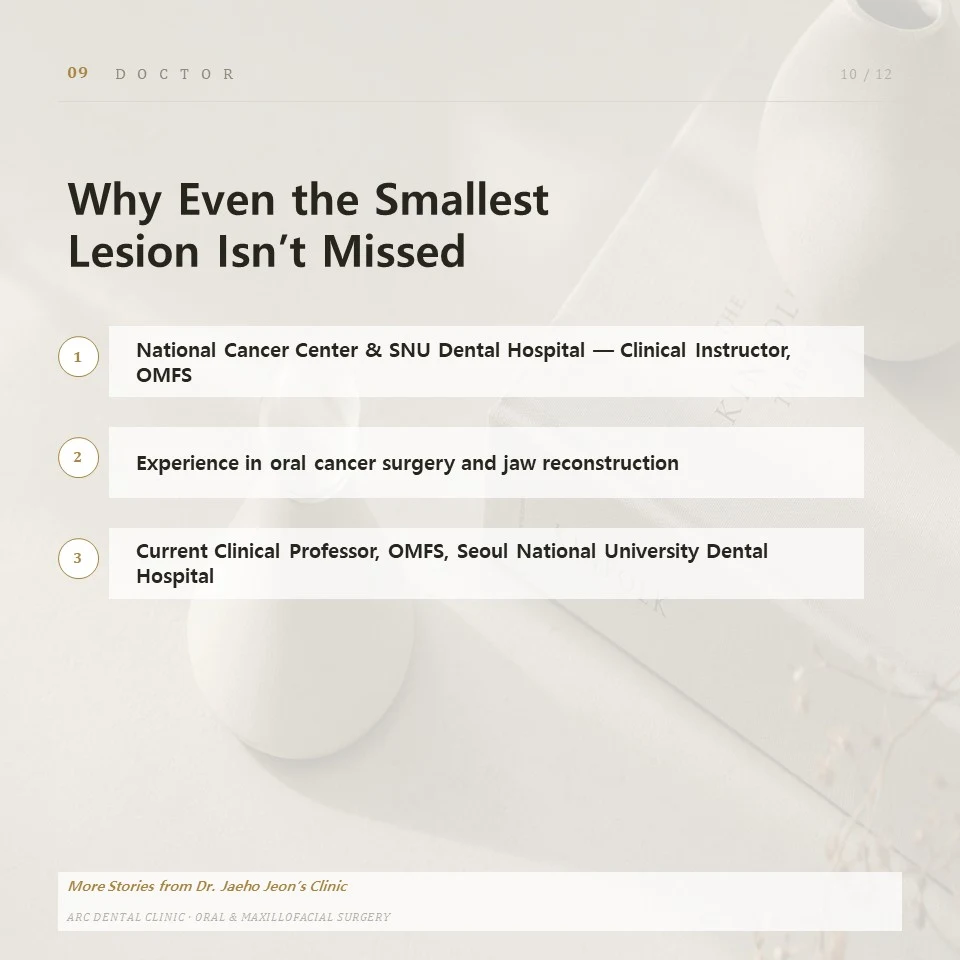
Those were not just surgeries to remove tumors; they were major procedures that involved resecting the jawbone and reconstructing it using the fibula from the leg. I believe those experiences shaped who I am today. There were days I entered the operating room in the morning and emerged late at night, and surgeries that spanned two days. During that time, I participated in many "major surgeries."
But looking back, one of the most unexpected lessons I learned at the university hospital was this: big diseases are not the only ones that matter. The outpatient clinic was not filled only with oral cancer patients.
"Something appeared on my gums."
"I feel a bump inside my mouth."
"My local dentist said it might be a cyst and told me to get it checked."
Many patients visited for these reasons. And for even that small lesion, the professors would examine its location, palpate it, check its relationship with the teeth, determine whether imaging was needed, and if necessary, perform a biopsy on the removed tissue. They never treated it lightly just because it was small.
At the time, I thought that process was so natural that it didn't seem special. But after opening my own clinic and meeting patients directly, I began to see things differently. What may be a few-millimeter lesion to a doctor can be a source of significant worry for a patient — someone who has checked it dozens of times with their tongue over several days, who has searched the internet for "gum bump" and eventually ended up at "gum cancer" or "oral cancer."
That is why I do not take a small bump on the gum lightly. But at the same time, there is no need to frighten you by talking about serious diseases from the very beginning. We look, we palpate, we perform necessary tests, and we carefully confirm what it is.
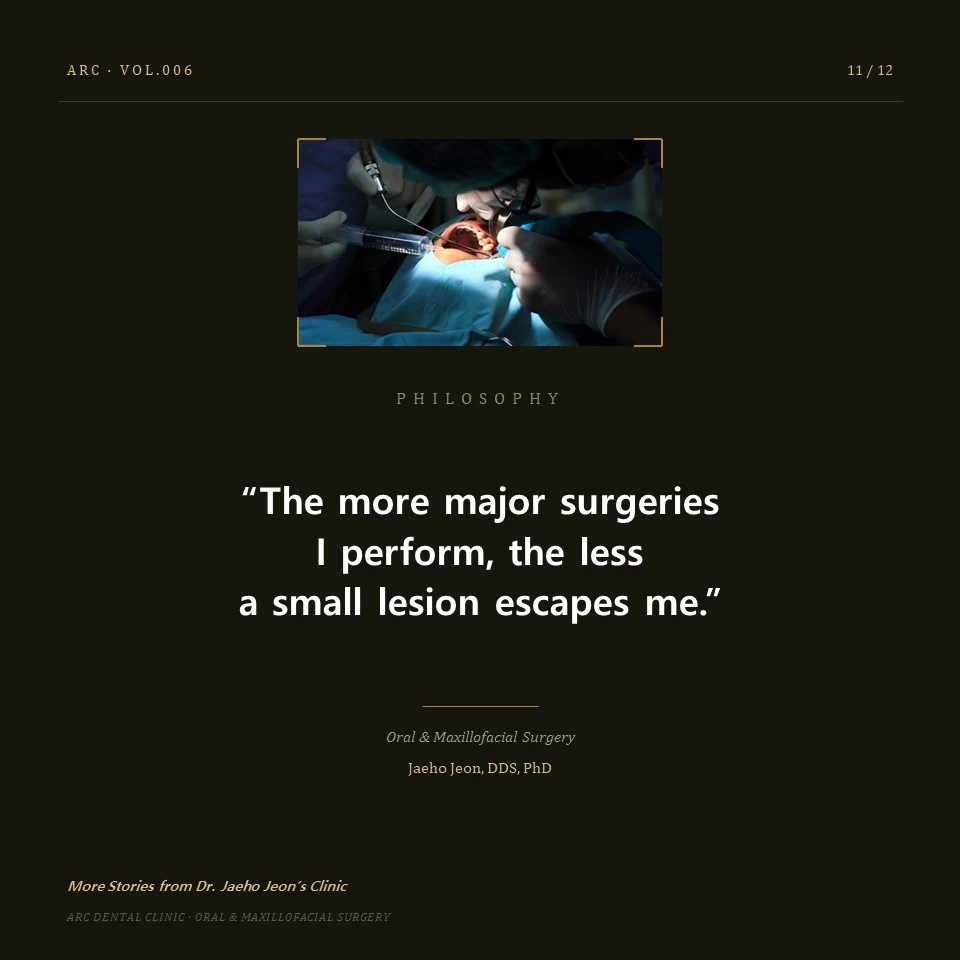
Perhaps what I learned during my long years at the National Cancer Center and Seoul National University Dental Hospital was not just the techniques of grand surgeries. The more major surgeries you witness, the more you realize something else. Small lesions must also be examined accurately. Oral & Maxillofacial Surgery may very well begin there.
So if you feel something on your gums, there is no need to panic and scroll through the internet search results all the way to the bottom. :) Especially if your search has already led you to "cancer," it is time to pause the search. Having it examined directly is much faster. ^^
Today's story has grown longer than I expected. :) I started out intending to briefly explain about "a bump on the gum," but as I see many patients in the clinic who worry greatly over this small bump, I found myself explaining more and more.
But if you remember just one thing from this long article, let it be this:
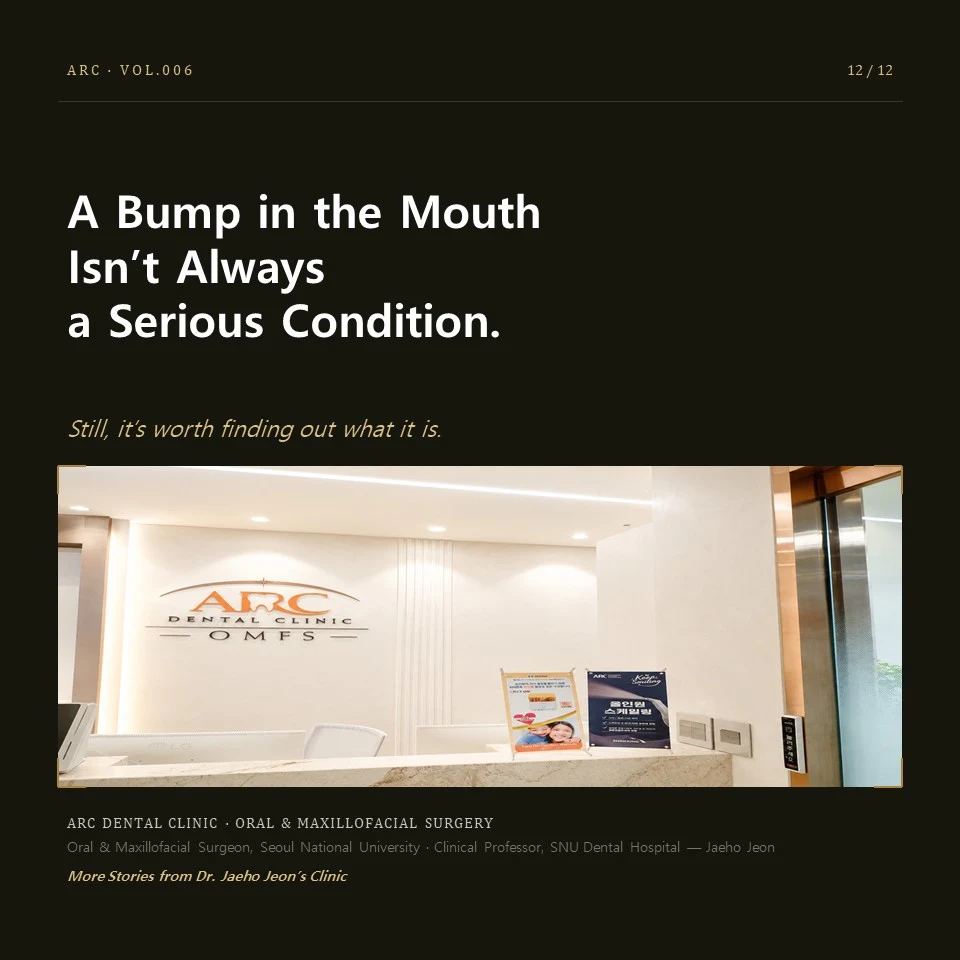
A bump in the mouth does not automatically mean a serious condition. However, it is important to have it examined and confirmed.
There is no need to escalate your worry by searching alone. If something new has appeared in your mouth or gums and it concerns you, please feel free to visit us. We will examine it directly, perform any necessary tests, and carefully explain "what it is, why it formed, and whether treatment is needed."
Thank you for reading to the end of this long article today.
This is Dr. Jaeho Jeon, Oral & Maxillofacial Surgeon at ARC Dental Clinic, serving the Gwanghwamun, Seoul City Hall, Jongno, Euljiro, Myeongdong, and Cheonggyecheon areas, providing treatment for difficult wisdom tooth extractions, implant revision surgery, jaw joint treatment, cavity treatment, and oral lesions.
Please take care of your health during this hot weather. Thank you.