Hello.
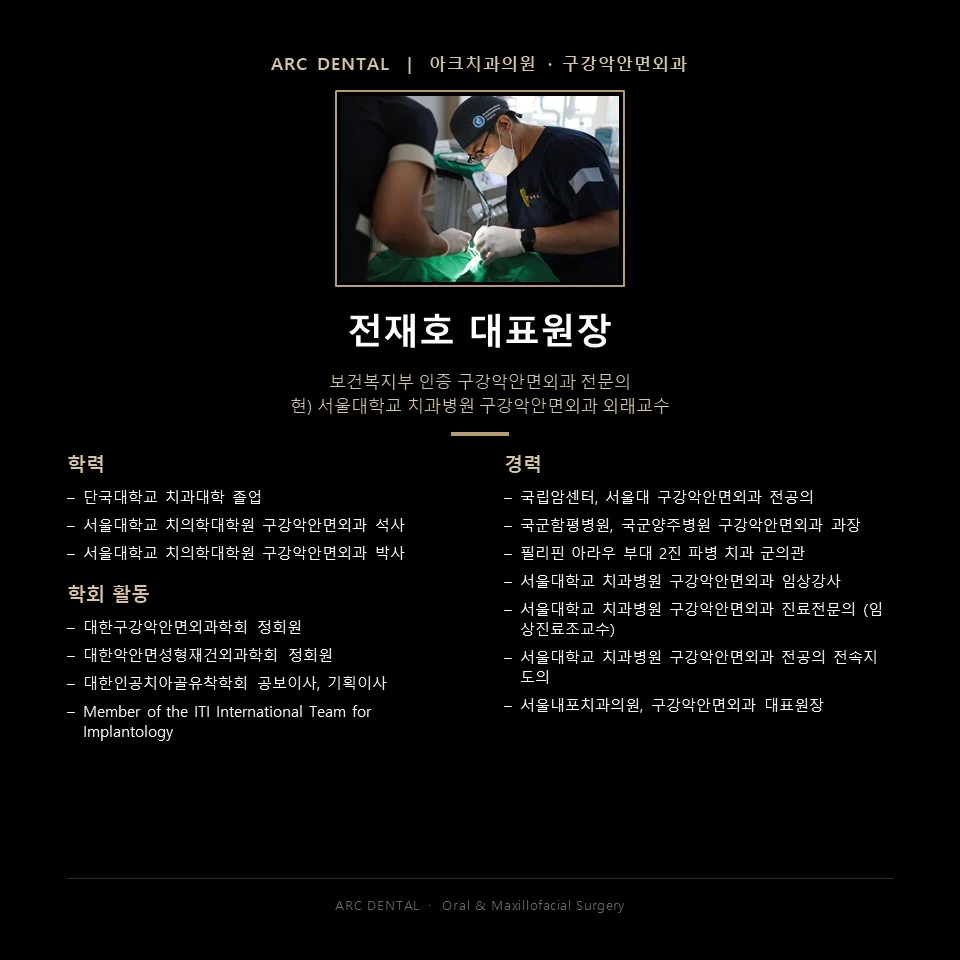
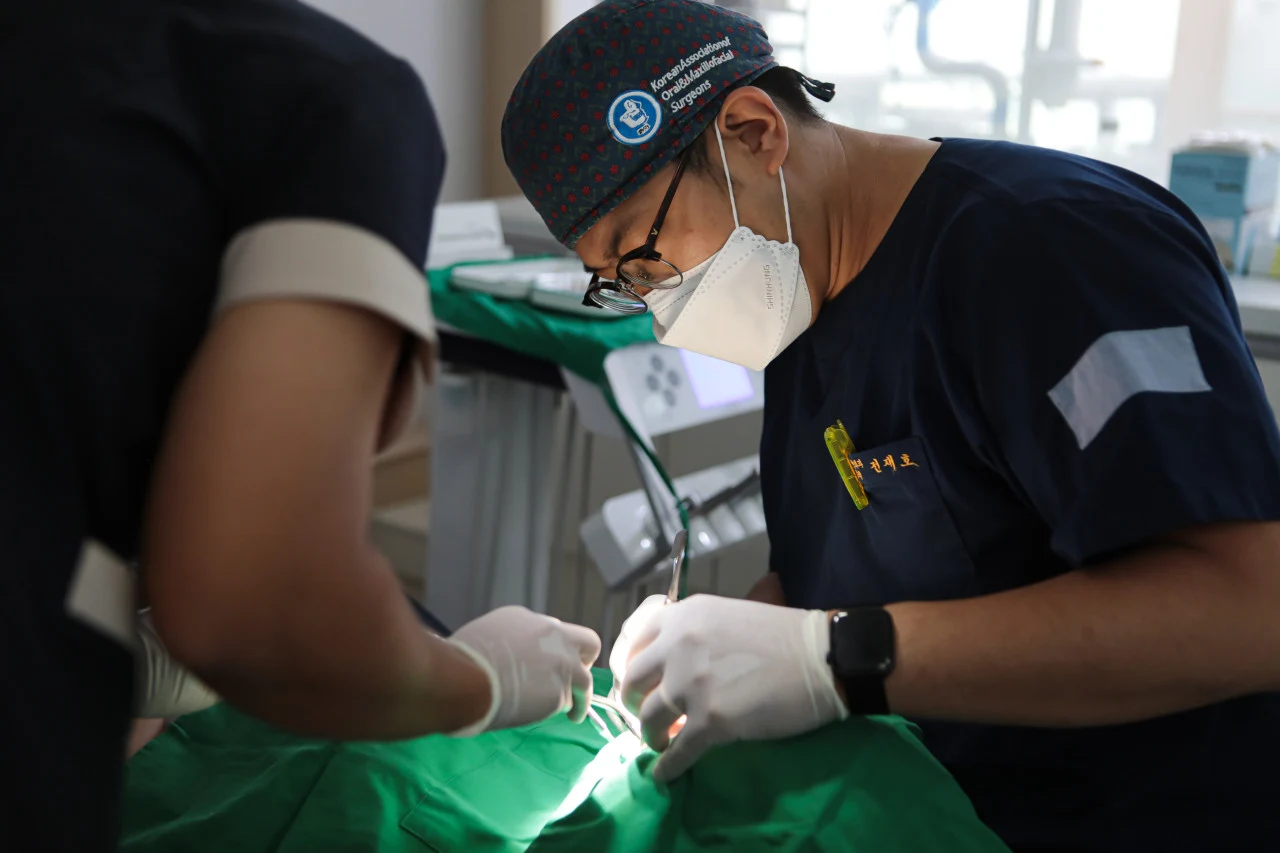
I am Jaeho Jeon, an Oral & Maxillofacial Surgeon at ARC Dental Clinic and a visiting professor at Seoul National University Dental Hospital, working hard to treat difficult wisdom tooth extractions, oral cysts, biopsies, implant placement, and revision surgeries around Gwanghwamun, Jongno, Euljiro, Seoul City Hall, and Myeongdong.
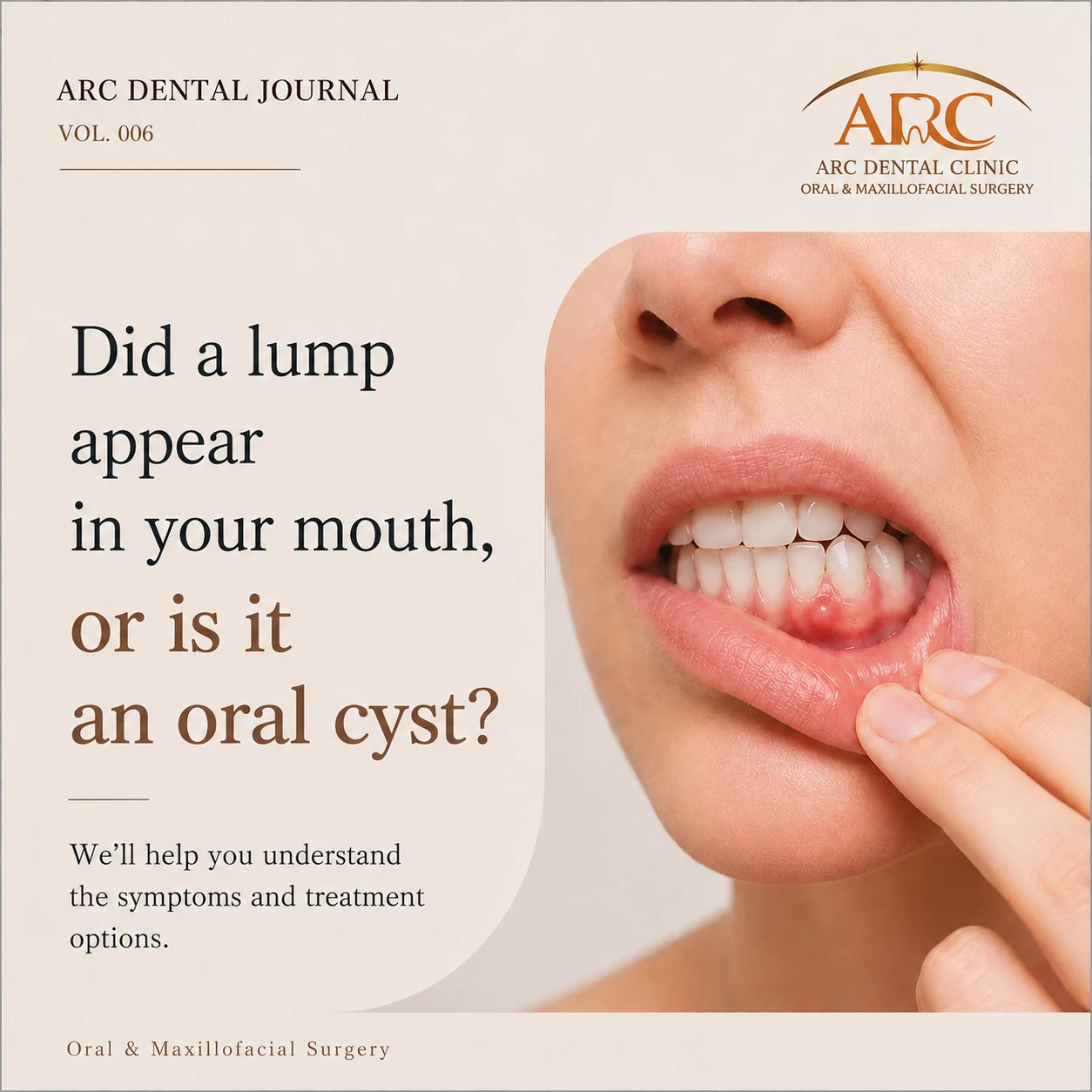
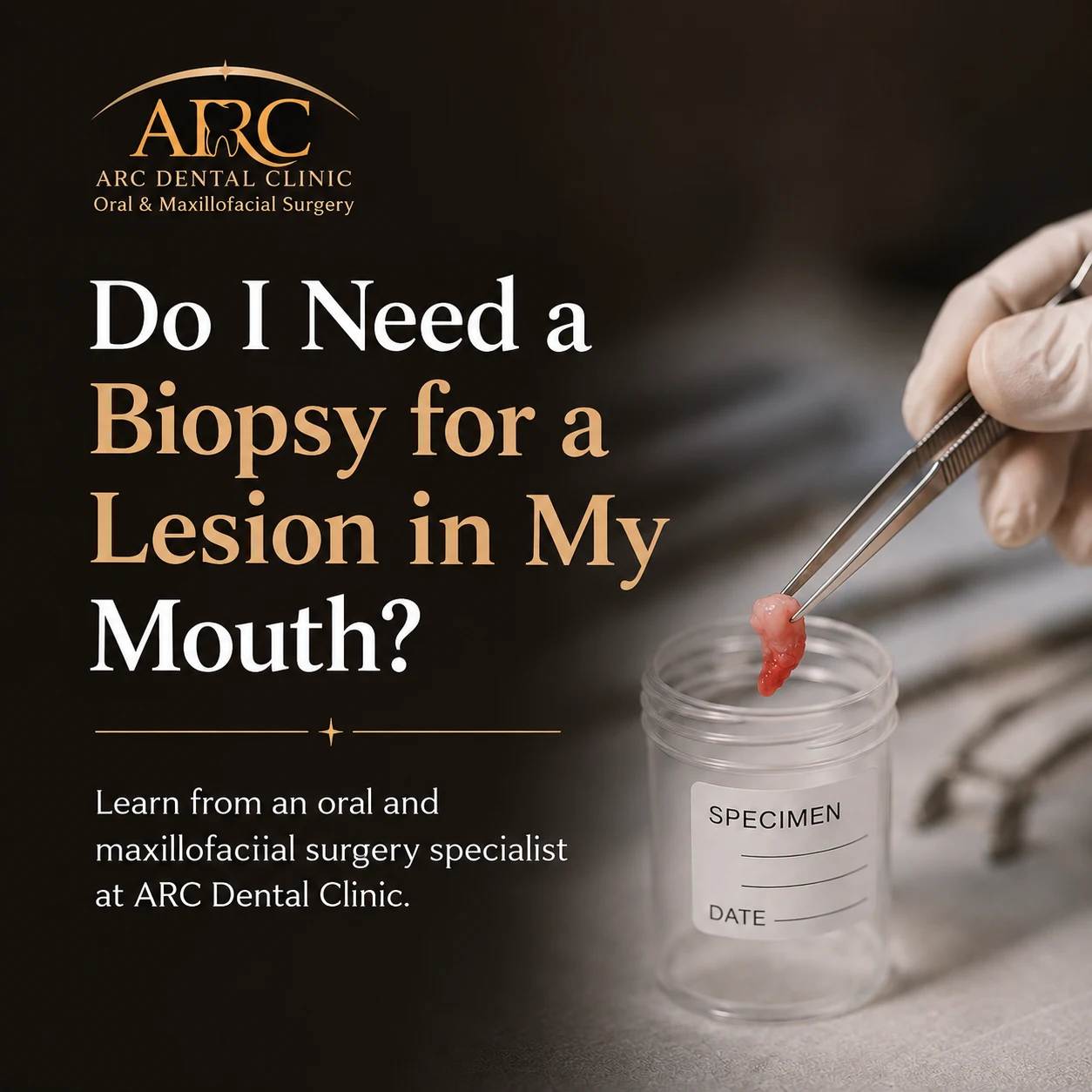
In my previous article, "I Have a Bump on My Gums — Is It a Gingival Cyst?", I explained bumps on the gums and oral cysts. Today, I would like to explain about oral biopsy.
I feel something on my gums.
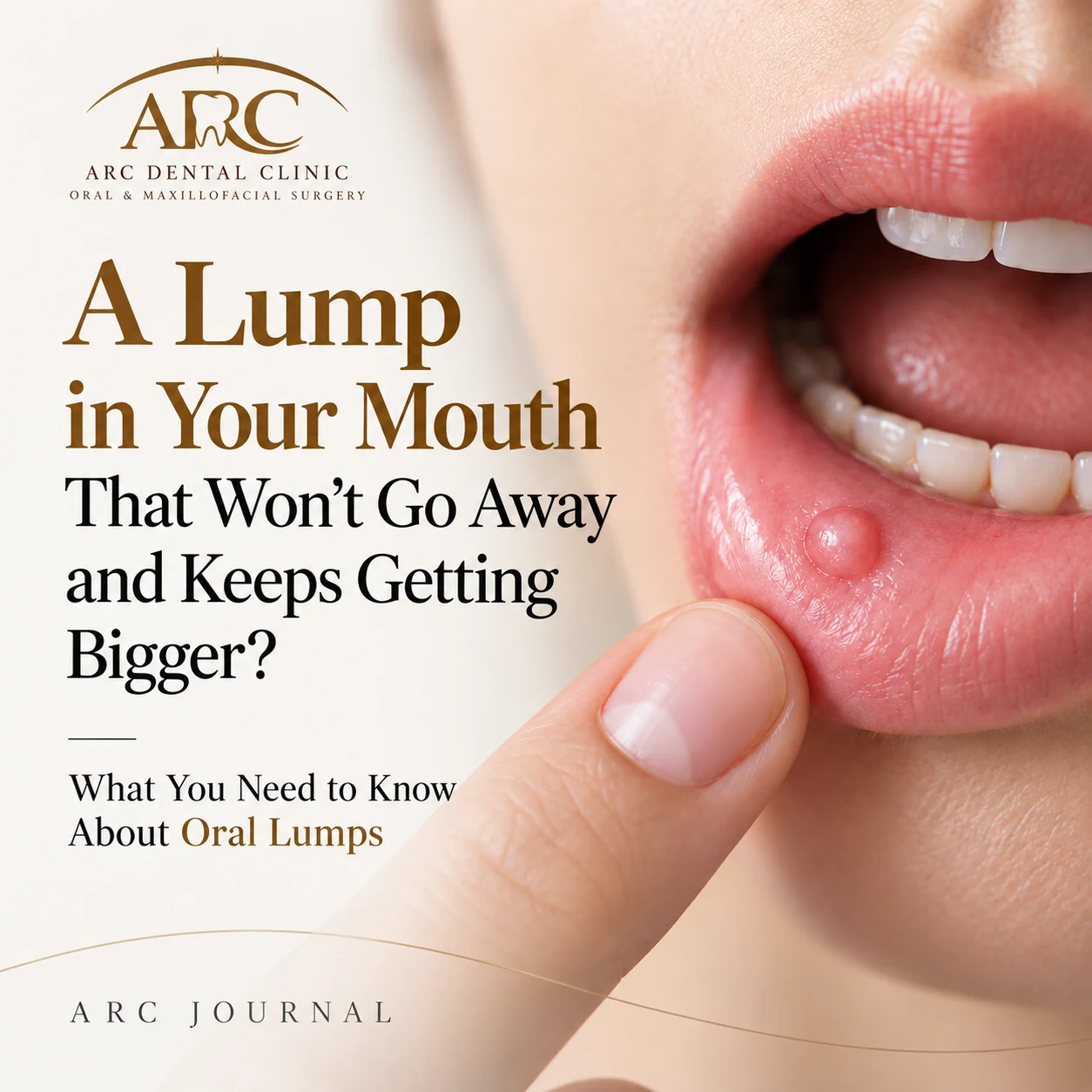
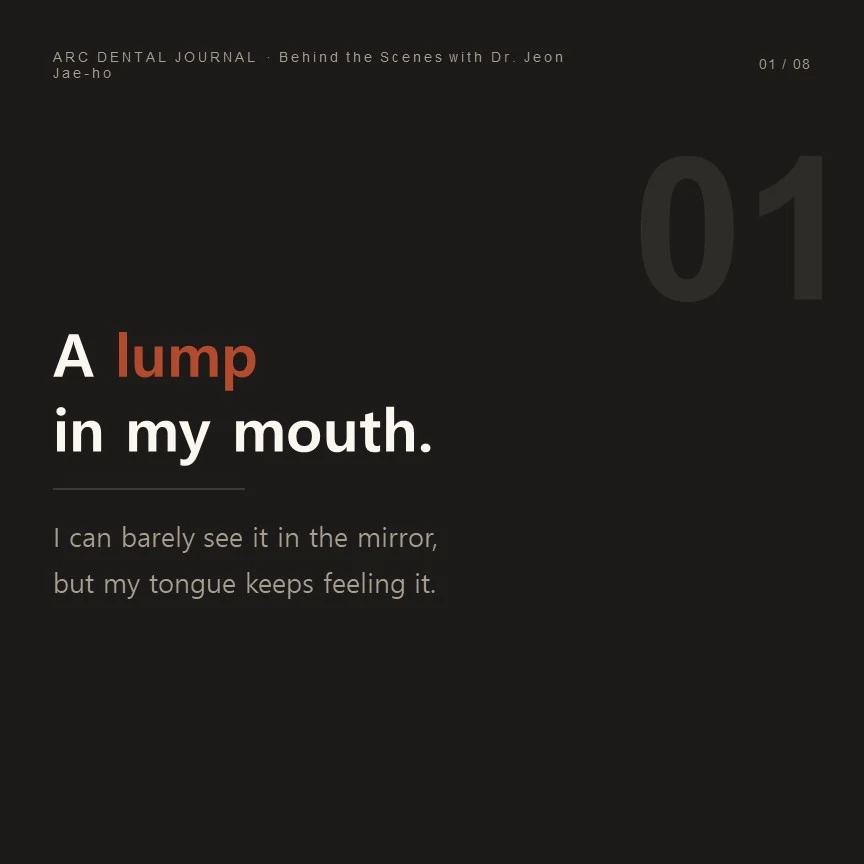
There is a bump in my mouth.
Something strange appeared on my tongue.
For these reasons, quite a surprising number of patients come to the Oral & Maxillofacial Surgery department at ARC Dental Clinic.
In fact, whether I am placing an implant, extracting a wisdom tooth, or examining a bump in the mouth, the day passes quickly. 😊
One reason many people choose ARC Dental Clinic is probably my experience diagnosing and operating on a wide range of oral diseases — including oral cancer, implant revision surgery, and difficult wisdom teeth — at the Oral & Maxillofacial Surgery department of Seoul National University Dental Hospital and the National Cancer Center.
Of course, not every bump in the mouth is a serious condition.
However, because I have experienced a wide range of cases — from ordinary oral mucosal lesions to lesions that require a biopsy — I believe patients come to me with the wish to "have it checked accurately, just once."
To live up to that trust, I place the greatest importance on reassuring patients when I can say "It's fine," and, when a check is truly necessary, explaining the reason thoroughly.
To patients who are worried about a bump in the mouth
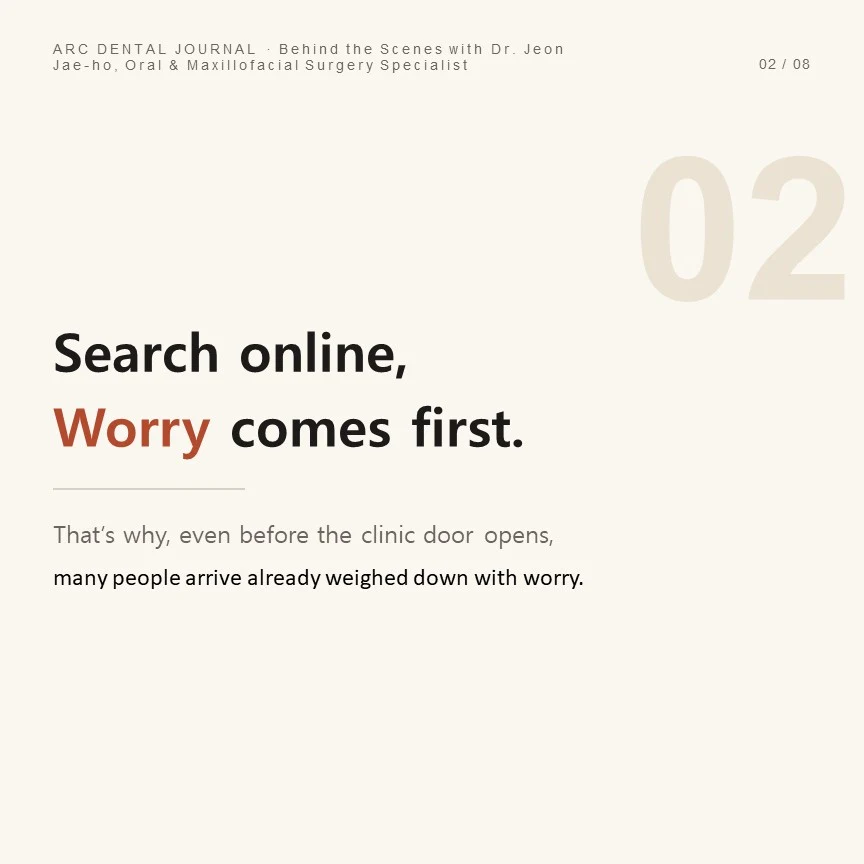
Many of the patients who come to ARC Dental Clinic because of a bump in the mouth arrive already having worried alone for days before even opening the clinic door.
"Doctor... it's not oral cancer, is it?"
The less you can see it, the more the worry grows.
This is a question I hear very often while examining patients who visit because of a bump on the gums.
At first, most say, "I came because I can feel something in my mouth." But after examining a little, they eventually ask this.
"Doctor... it's not something bad, is it? Like oral cancer......."
Honestly, I think I would feel the same.
Even with a mirror, the inside of the mouth is hard to see, and your hand can feel something but you don't know what it is...
And when you search online, frightening stories fill the very first page.
That is why, even after the examination, some patients speak up first: "Just in case, please do a biopsy too....." I fully understand that feeling.
But there is one thing I always want to say.
Not every bump in the mouth is oral cancer
In fact, in actual practice, I much more often encounter cases that do not require great worry — such as mucoceles, fibromas, and benign lesions caused by irritation.
Conversely, oral cancer is not judged simply by the appearance of "a bump."
We must consider several features together — an ulcer that does not heal, a lesion that keeps growing, a lesion that bleeds easily, and white or red lesions.
So the most important thing is not to reach a conclusion through an internet search, but to have it checked directly.
Then, should every bump in the mouth be biopsied?
I am asked this question very often too. Haha.
To give the conclusion first: no.
Not every bump or gingival cyst in the mouth is a candidate for biopsy.
Through examination, we first check the size, location, color, shape, and speed of change of the lesion.
Based on the result, we decide:
- Cases that can simply be monitored
- Cases where removal is recommended
- Cases where we remove it and perform a biopsy at the same time
We then choose the direction of treatment accordingly.
In other words, a biopsy is not a test done "because there is a bump," but a test done "because an accurate diagnosis is needed."
Not long ago, there was a patient like this.
This patient had come from far away and was uncomfortable because the bump in the mouth kept touching during meals.
At the first visit, I carefully examined the lesion and fully explained the current condition and treatment options.
After hearing the explanation, the patient returned a few days later and decided on removal, and while preparing for the surgery, said this.
"Doctor, just in case, please do a biopsy too."
So the removed tissue was sent to the Oral Pathology department at Seoul National University Dental Hospital for pathological examination.
In fact, this is not a special case. It happens more often than you might think in the clinic.
Patients feel more reassured by the words "Now we can check it accurately" than by "We will do a biopsy."
I, too, believe the greatest purpose of a biopsy is not to make an illness worse, but to end vague anxiety.
I want to give you peace of mind
When examination alone is sufficient, I explain why a biopsy is not necessary; when a biopsy is necessary, I explain step by step why it is needed and how the results are checked.
I believe that is the role of an Oral & Maxillofacial Surgeon.
How is an oral biopsy performed?
First, let me say one thing.
The fact that you have a gingival cyst or a bump in the mouth does not mean everyone must have a biopsy.
We carefully check the size, shape, location, and pattern of change of the lesion, and recommend a biopsy only when it is judged truly necessary.
Conversely, when the progress can be observed by examination alone, we do not perform a biopsy.
In other words, the principle is not "biopsy because there is a bump," but "biopsy when an accurate diagnosis is needed."
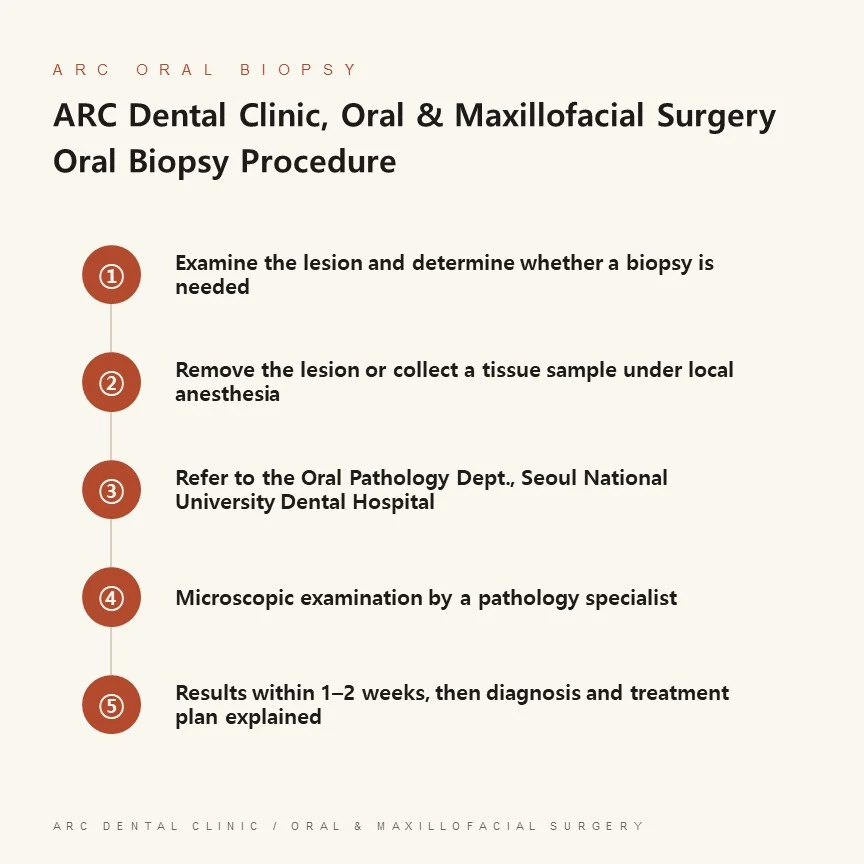
Many people think of a "biopsy" as a major test, but most oral biopsies can be performed relatively simply in the outpatient clinic. When a biopsy is judged necessary, we perform local anesthesia to minimize pain before the procedure. (The method may vary slightly depending on the size and location of the lesion.)
First, we fully check the location, size, and shape of the lesion, then judge whether a biopsy is needed.
If the lesion is small, we often remove the entire lesion along with the biopsy.
If the lesion is large, we may take only part of the tissue for pathological diagnosis first, and decide the treatment plan based on the result.
The collected tissue is sent to the pathology department for microscopic examination.
At ARC Dental Clinic, when necessary, we refer the biopsy to the Oral Pathology department at Seoul National University Dental Hospital to confirm a more accurate pathological diagnosis.
After the procedure, most cases undergo a simple suture.
Biopsy results generally take about one to two weeks, and once the result is confirmed, we explain it in detail to the patient and, if necessary, guide them on the subsequent treatment plan.
As I mentioned earlier, the greatest purpose of a biopsy is not "to find a serious disease" but "to confirm an accurate diagnosis."
Because lesions that look similar on the outside may have different actual diagnoses, a biopsy can be the most accurate diagnostic method when necessary.
This shows a removed lesion placed in a container, being sent to the oral pathology department.
You can stop searching now
When I examine patients who visit because of a bump in the mouth or a lesion on the gums, there is a remark I hear almost without fail.
"Doctor, I searched the internet too much... so I'm really worried. Haha."
Stop searching now — ARC Dental Clinic will take away your worry!
At such times, I smile and say.
"Stop searching now, and let me take a look inside your mouth." 😊
The time spent worrying alone is far longer than the time it takes to get an accurate diagnosis.
Search the internet only until today — we will check the rest for you.
This has been Jaeho Jeon, Oral & Maxillofacial Surgeon at ARC Dental Clinic and visiting professor at Seoul National University Dental Hospital, working hard to treat difficult wisdom tooth extractions, oral cysts, biopsies, implant placement, revision surgery, TMJ, and cavities around Gwanghwamun, Jongno, Euljiro, Seoul City Hall, and Myeongdong!