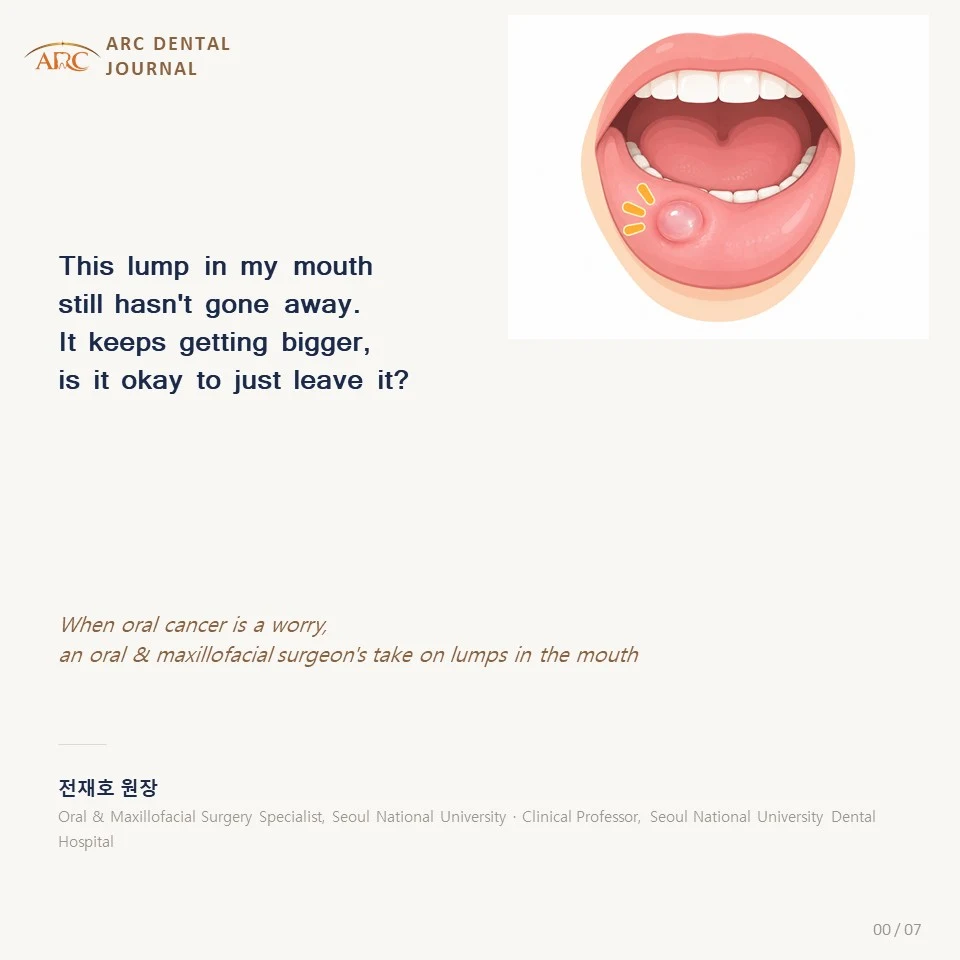
“Doctor, this has actually been there for a few years…”
Hello. I am Jaeho Jeon, an Oral & Maxillofacial Surgeon at ARC Dental Clinic and a visiting professor at Seoul National University Dental Hospital, working hard near Gwanghwamun, Jongno, Myeongdong, and Euljiro on implant placement and revision, wisdom tooth extraction, cavity treatment, TMJ treatment, and oral cyst surgery.
The weather has turned to a crisp autumn. It is hard to believe how hot it was just a moment ago — it has already cooled down.
I really love this kind of autumn weather, perfect for a walk.
Even in this lovely weather, patients visit ARC Dental Clinic's Oral & Maxillofacial Surgery for many reasons — a hurting tooth, a hurting jaw, or a lump in the mouth.
Not long ago, one patient in my office truly surprised me.
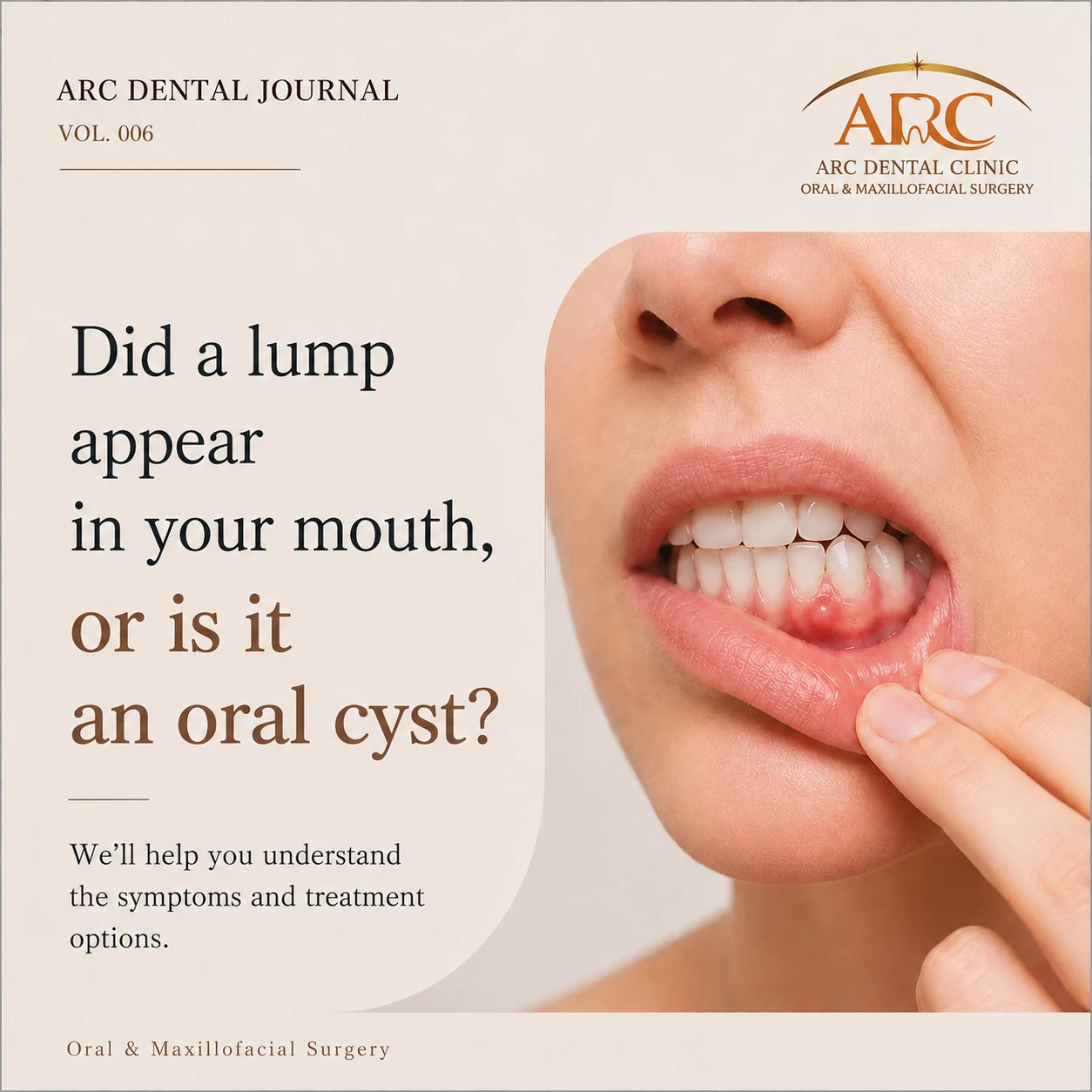
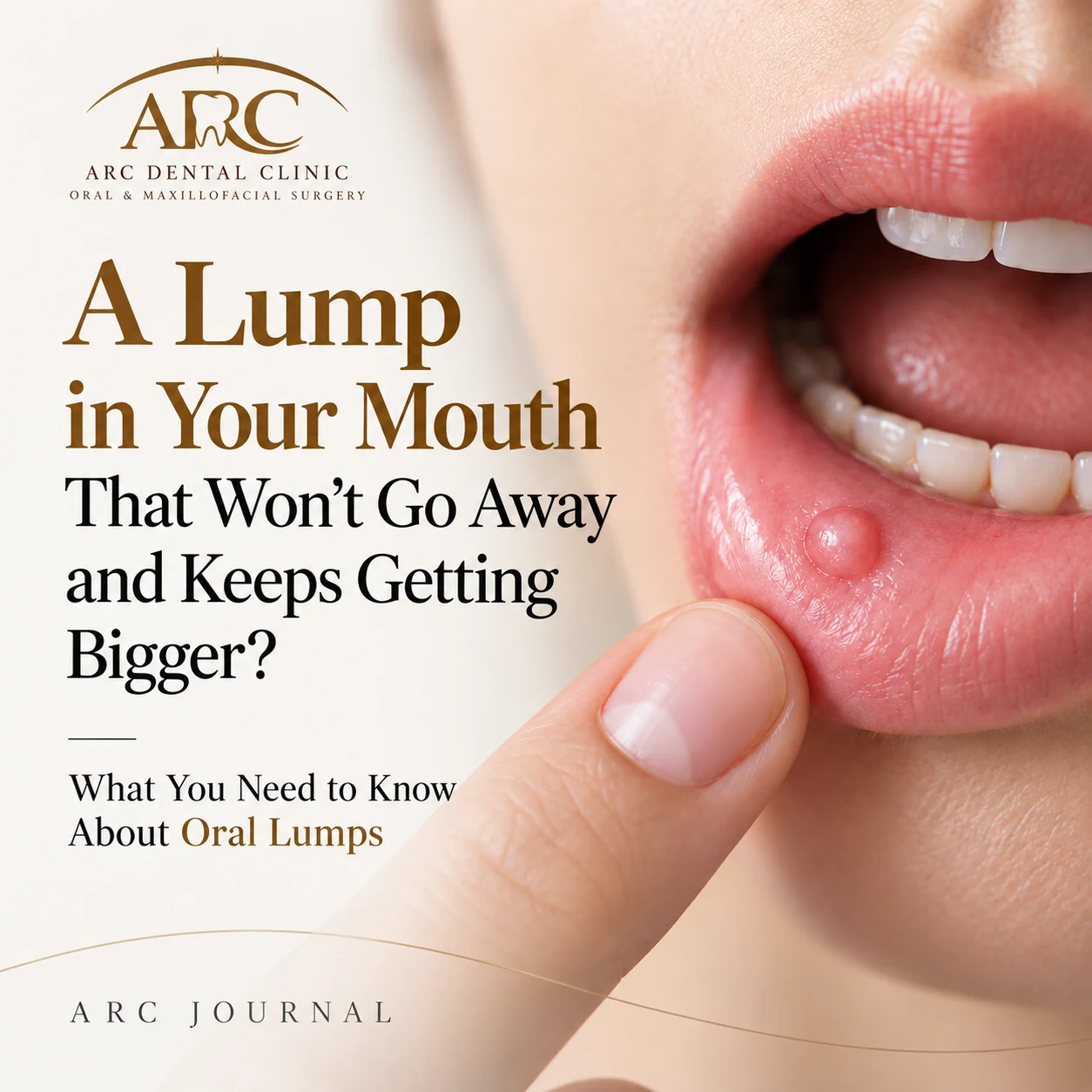
There was a lump-like growth on the gum. When I listened to the patient's story, it had been very small at first. It did not hurt, and since it was inside the mouth, it was not easy to see. On top of that, that area had always felt a little numb, so the patient simply ignored it. But rather than going away, it began to grow little by little over one year, then two.
Eventually, it had grown so large that even looking at the photo I had to ask, “How did you put up with this for years…?”
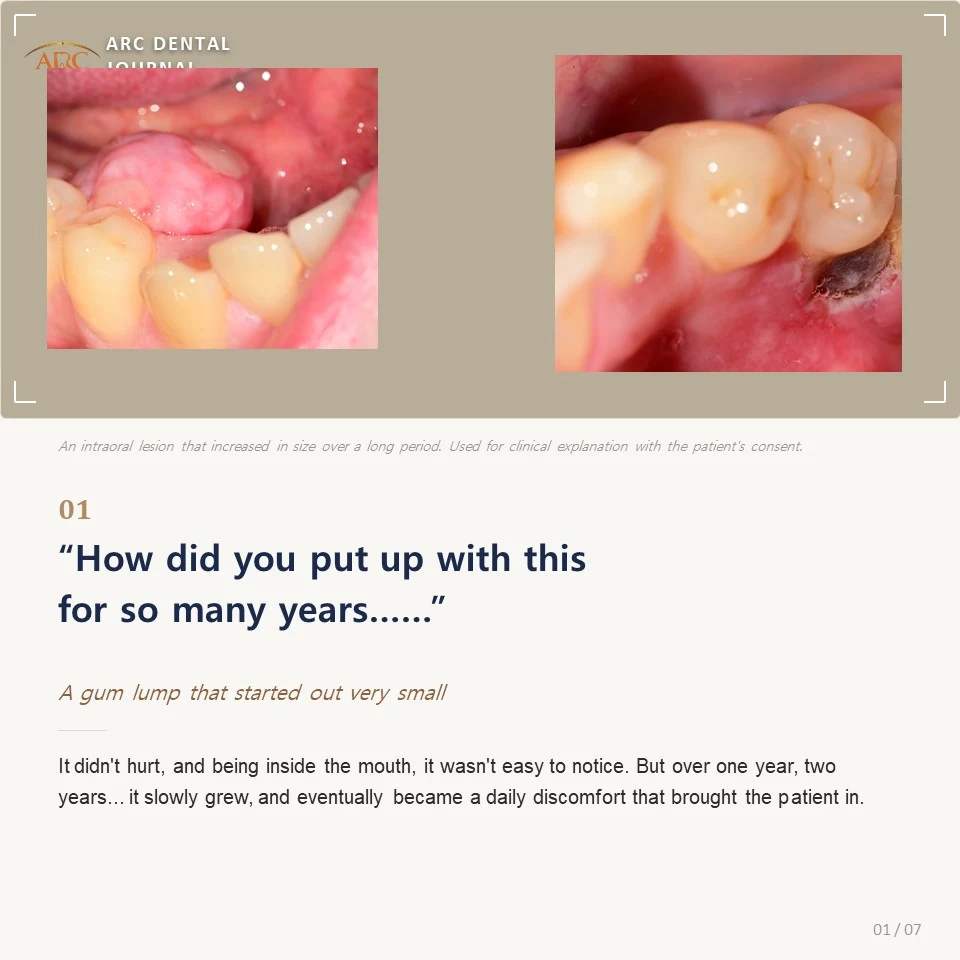
The inside of the mouth is more sensitive than you might think. The tongue has to move, food has to be chewed, and words have to be spoken. How uncomfortable must it have been for a growth of that size to sit there all that time?
The patient could no longer bear it, and above all, one worry had begun to take hold.
“This… it's not something bad, is it?”
When something appears in the mouth, the first thought is…
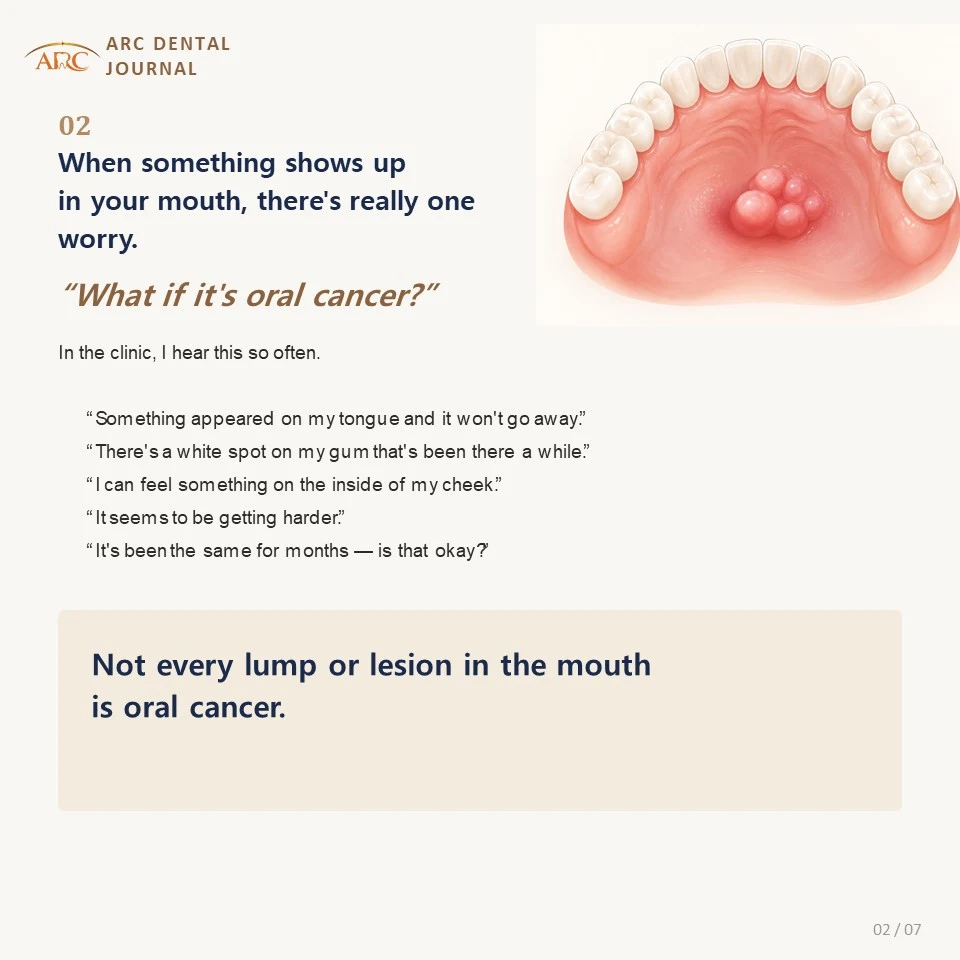
Most patients who come to the office with an oral cyst begin by describing symptoms like these.
“Something came up on my tongue and it won't go away.” “When I touch my tongue, I can feel something.” “A white patch appeared on my gum and it's still there.” “It hurts a little when I press it.” “Something appeared inside my cheek and it seems to be getting harder.” “It's been the same for months — is that okay?”
But after talking a little more, the worries in their hearts are all similar.
‘What if it is oral cancer?’
Searching online makes it even scarier. You search ‘lump on tongue’ and get tongue cancer, search ‘lump on gum’ and get oral cancer, and after looking at a few photos, it suddenly seems similar to what is in your own mouth. From then on, you end up checking your tongue in the mirror ten times a day.
But here is what I want to say first. Not every lump or lesion in the mouth is ‘oral cancer.’ In fact, among the lesions we see in the office, the far greater number are not serious.
That said, we cannot simply say “It's fine” to everything either. This is the important part. There is no need to be terrified just because something appeared in your mouth. On the other hand, glancing at a photo and thinking “It's probably nothing,” then leaving it for years, is not a good approach either.
In these cases, it is worth checking at least once
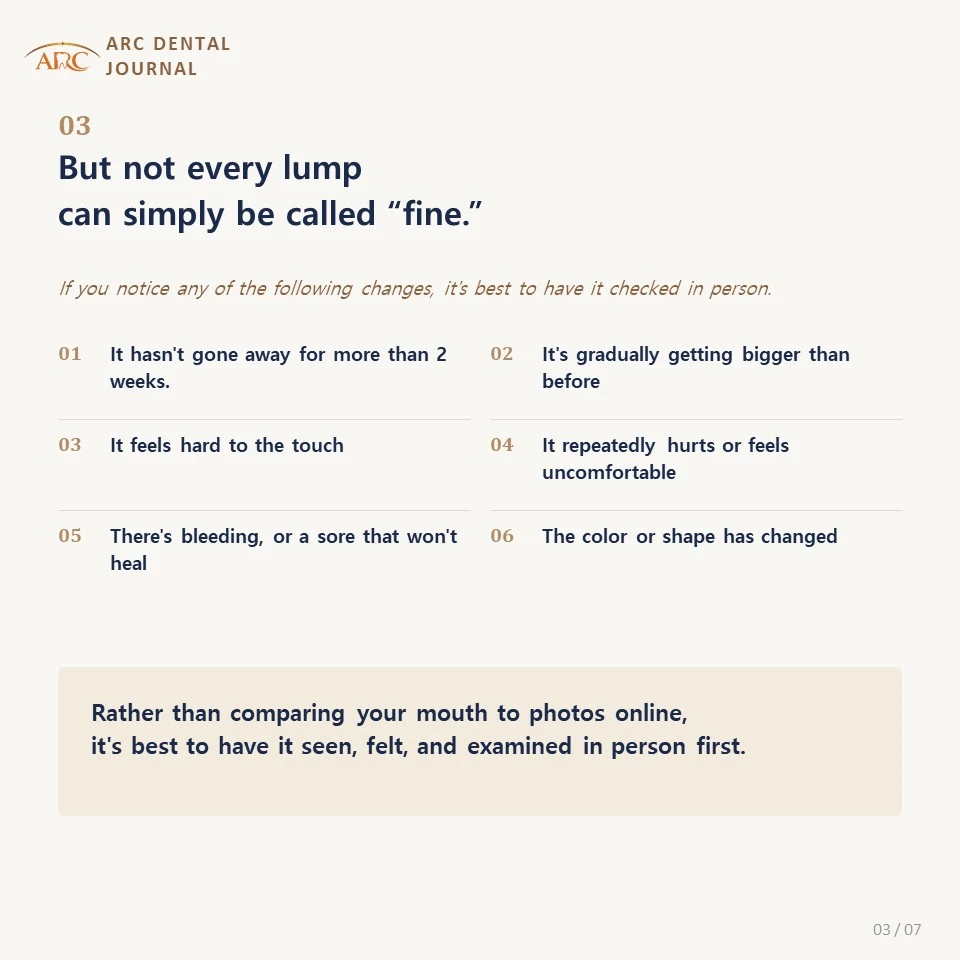
✔ A lesion that does not disappear after more than 2 weeks
✔ One that grows larger than when it first appeared
✔ One that feels firm when touched
✔ One that hurts when pressed or causes repeated discomfort
✔ One that bleeds or has an ulcer that will not heal
✔ A lesion on the tongue, gum, or inside the cheek that keeps persisting in the same spot
✔ One whose color or shape is different from before
What is needed here is not to spend 30 minutes comparing internet photos with your own mouth, but for an Oral & Maxillofacial Surgeon to actually look inside the mouth, feel it, and perform the necessary examinations.
Back to that patient from earlier…
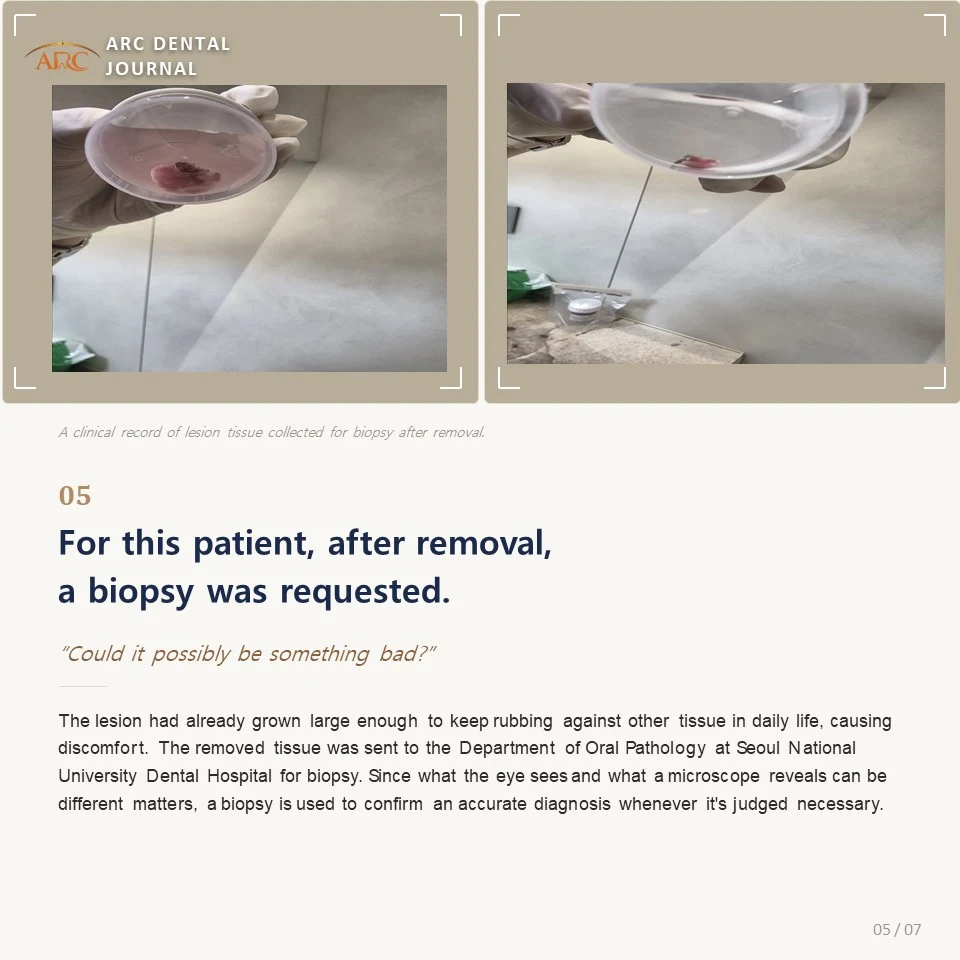
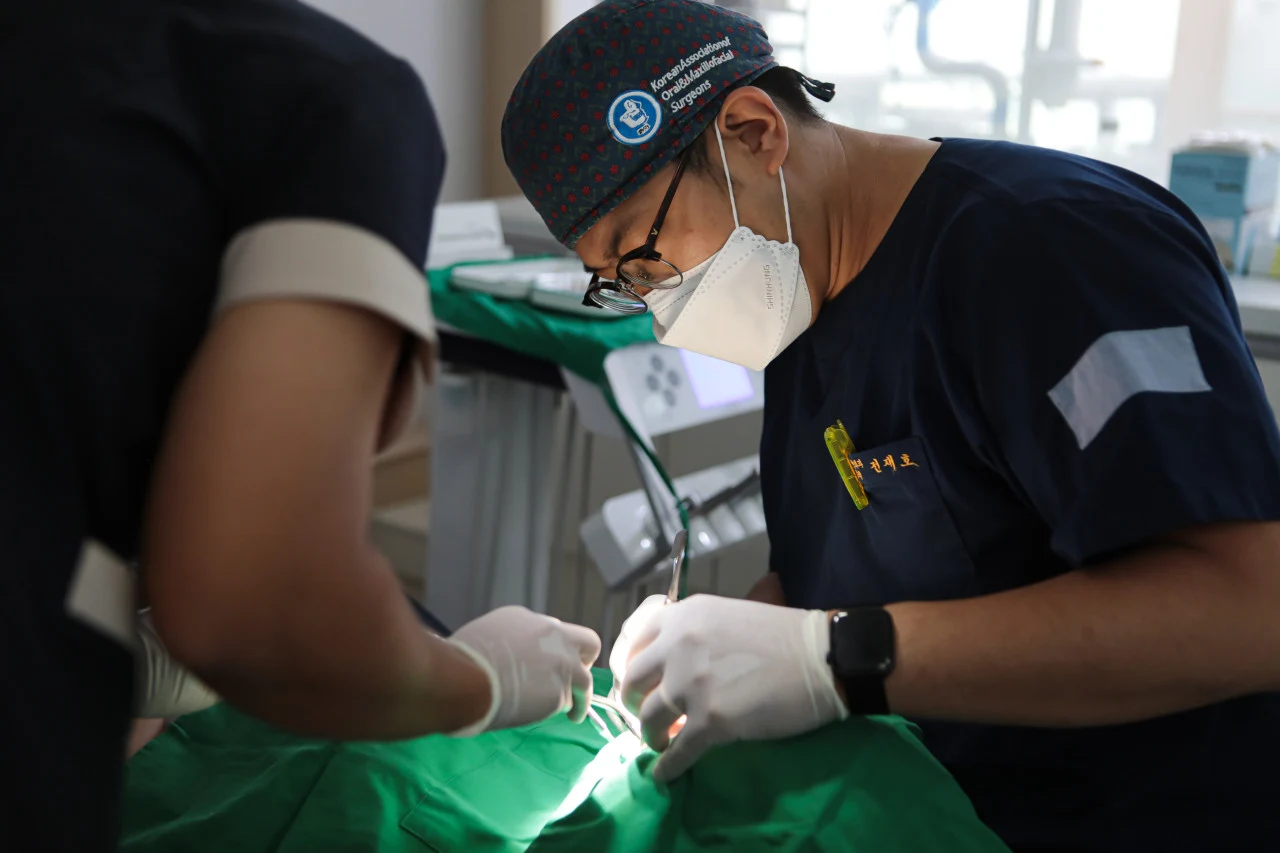
This patient also decided to have the lump in the mouth removed. In this case, the growth had already become quite large. It kept touching the surroundings and was uncomfortable in daily life, and above all, the patient had long worried, “What if it's something bad?” So after examining the lesion, I proceeded with removal.
Not every lesion in the mouth requires major surgery. We check the location and size of the lesion and its relationship to surrounding tissue, and in some cases it can be removed with a minimal incision.
And that is not the end of it. The patient's greatest worry was, of course, “Could this be oral cancer?” — so the removed tissue was not simply discarded. It was sent to the Department of Oral Pathology at Seoul National University Dental Hospital for a biopsy. Seeing with the eyes and examining tissue under a microscope are different matters. For lesions where it is judged necessary, it is important to remove them and then confirm precisely through a biopsy.
But why was it left for years?
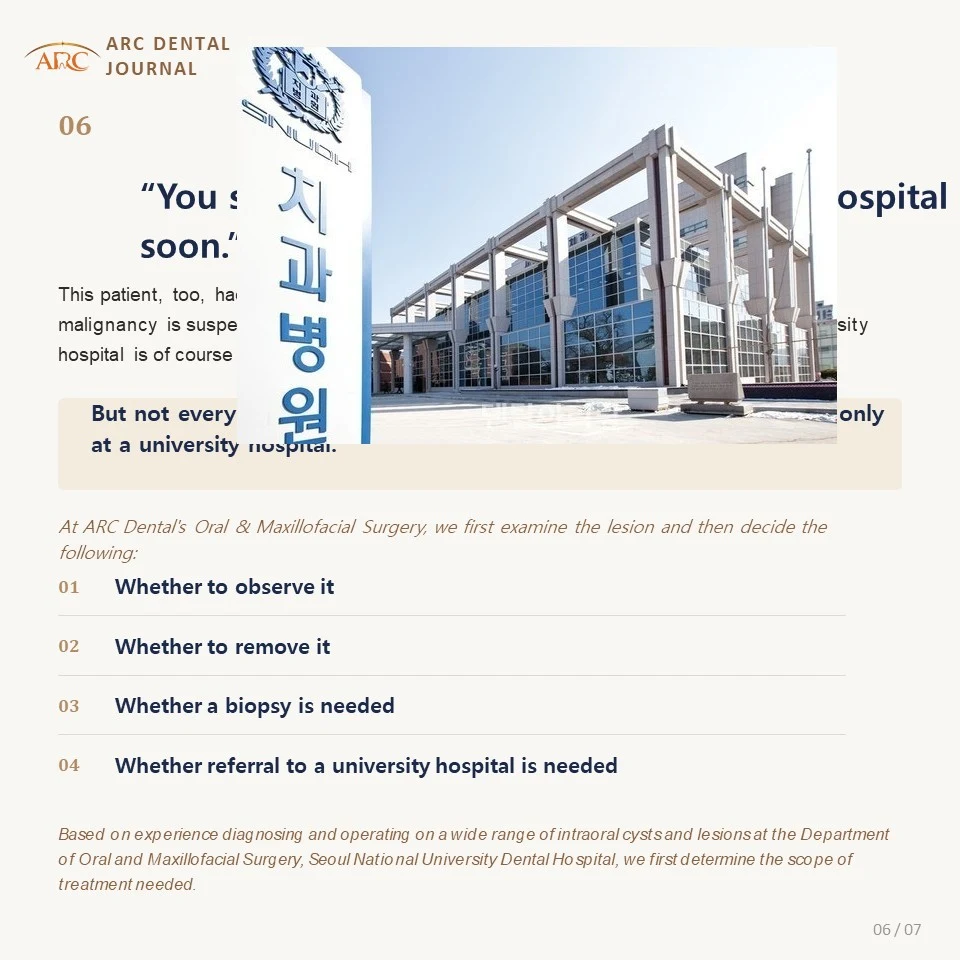
I was curious too, so I asked. Given the size of the cyst, I imagined the patient must have been quite uncomfortable. But the answer was unexpected. The patient had not simply done nothing all that time. They had visited a general dental clinic a few times. But because the growth was fairly large, the clinics they visited told them the same thing: “I think you should go to a university hospital for this…”
That statement is not wrong. For large lesions or oral lesions that require a diagnosis, university hospital care is definitely sometimes necessary. The problem is what comes next. You book an appointment, wait, receive the professor's consultation, get examined again, set a surgery date… From the patient's perspective, it can take quite a long time. “I never knew it would take this long to get surgery at a university hospital…”
I, too, treated many oral cancers as well as oral cysts and lesions while working in the Department of Oral & Maxillofacial Surgery at Seoul National University Dental Hospital. One of the things I heard most often from patients back then was this: “It takes longer than I expected to get treatment and then surgery.”
University hospitals are, of course, necessary. Especially when the lesion is extensive, malignancy is suspected, general anesthesia is needed, or broader surgery is required, university hospital care may be appropriate. But not every small lump or cyst in the mouth must be treated only at a university hospital.
So these days, quite a few people come to ARC Dental Clinic's Oral & Maxillofacial Surgery saying, “A local clinic told me to go to a university hospital, but could you take a look here first?”
Will an oral cyst go away if left alone?
I get this question a lot, too. The answer depends on the lesion. A lump in the mouth does not have a single cause. Some can simply be observed, some improve once the source of irritation is removed, and some are removed simply if the discomfort is significant. Some lesions can also recur even after removal. To put it simply, some are like acne that comes back. It means we cannot say to every lesion, “Since it's removed, it will never come back in your life!”
However, if it keeps growing, the story changes somewhat. What did not bother you when it was small will, as it grows, keep touching the tongue or cheek, get bitten when eating, hurt when pressed, and keep drawing your attention. And above all, living for years with the worry ‘What on earth is this?’ is itself considerable stress.
A lump in the mouth — where should I go?
Many people get stuck here while searching because of a lump or cyst in the mouth. Should I go to a dermatologist? An ENT? A general dental clinic? Or a university hospital?
The field that diagnoses and operates on these oral lesions, oral cysts, gum lumps, and tongue lesions is precisely ‘Oral & Maxillofacial Surgery.’ I am a board-certified Oral & Maxillofacial Surgeon trained at Seoul National University, and I currently serve as a visiting professor in the Department of Oral & Maxillofacial Surgery at Seoul National University Dental Hospital.
For those who come with an oral cyst, from a small lump in the mouth to cysts, mucoceles, and apical lesions, we first examine the condition and then determine whether it can be observed, whether removal is needed, whether a biopsy is needed, or whether university hospital care is required.
The names are hard as soon as you search
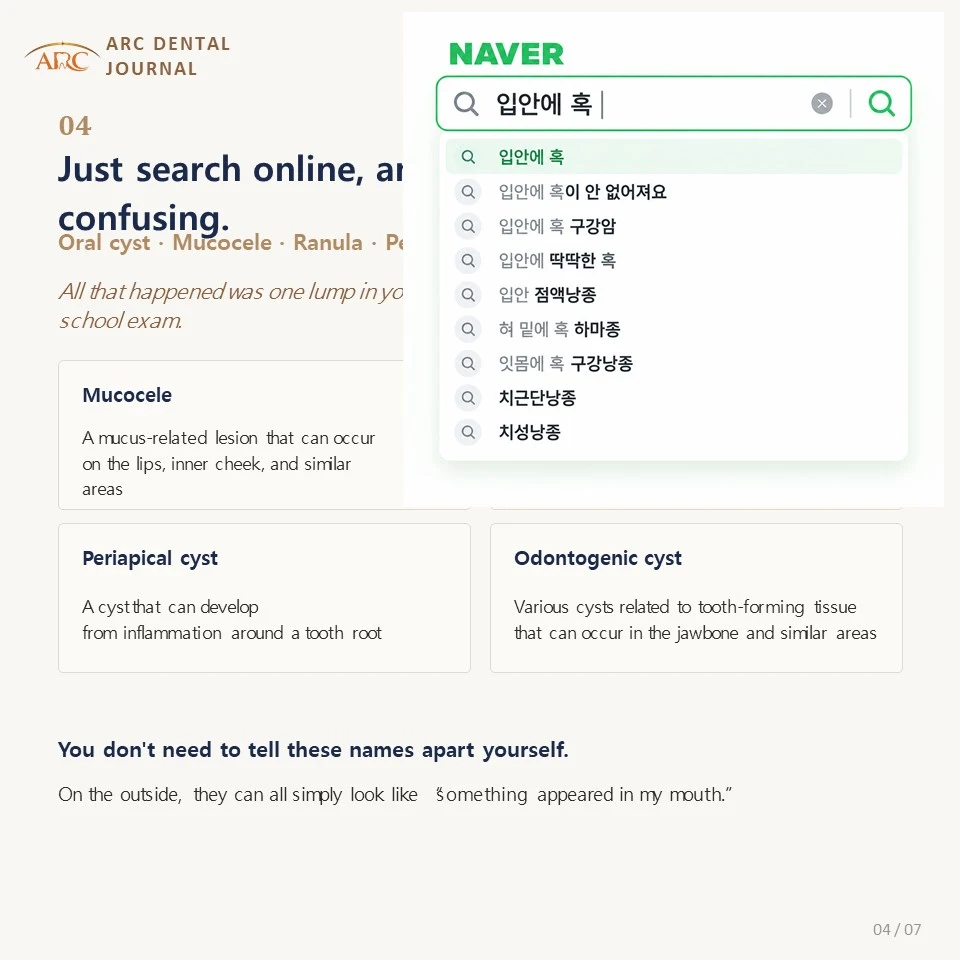
Search online and there are far too many names related to oral cysts. People usually search a lot with symptoms like these: “Something came up on my gum.” “There's a lump in my mouth.” “Under my tongue is swollen.” You searched because of a single lump in your mouth, and suddenly unfamiliar words pour out — oral cyst, mucocele, ranula, apical cyst, odontogenic cyst… At this point, a single small lump in your mouth has you starting to study for a dental school exam.
But you do not need to distinguish all these names yourself. A lump or cyst in the mouth gets a different name and cause depending on where it arose, which tissue it started from, and whether it is related to a tooth. For example, there is a mucocele that repeatedly appears like a soft blister on the lip or inside the cheek, and a ranula that swells in relation to the salivary glands under the tongue, at the floor of the mouth. There is also the apical cyst, which can form inside the jawbone in relation to inflammation around a tooth root, and, including these, various odontogenic cysts related to tooth-forming tissue.
So rather than looking at a few photos online and concluding on your own — “Mine looks like a mucocele,” “I searched and it's exactly like a ranula” — what comes first is to check the actual location, size, texture, and relationship to the surrounding teeth. If necessary, we check an X-ray or CT, and we may send the removed tissue for a biopsy to confirm an accurate diagnosis. Especially if an oral lesion does not disappear after several weeks, keeps growing, becomes firm, repeatedly swells, or is accompanied by pain, bleeding, or an ulcer, it is worth checking at least once.
And here is the single most important thing… A lump in the mouth does not immediately mean oral cancer. In reality, there are many relatively common and benign cases, such as mucoceles or lesions related to irritation. But since looking similar at a glance does not make every lesion the same, it is neither “I'm too scared it might be cancer, so I won't go” nor “It doesn't hurt, so let's leave it a few more years” — it is, first, to find out what it is. I believe that is the most important thing.
On a side note — I'm also good at cavity treatment and implants
Looking at the patients who come to ARC Dental Clinic these days, there is a slightly interesting pattern. “I came because I was told to go to a university hospital.” “I came because my wisdom tooth is close to a nerve.” “I have a lump in my mouth — can you do a biopsy?” “Another place said implant surgery would be difficult.” Many such patients come to us. As an Oral & Maxillofacial Surgeon, it seems that patients who are a little more difficult or need a surgical judgment search for us and come. I am grateful for that.
But sometimes I want to say this: we also do cavity treatment. We do root canal treatment. We do crowns. And we do implants very diligently, too. Implants in particular are based on surgical procedures, so it is best to visit a clinic with an Oral & Maxillofacial Surgery department. In any case, you are welcome to visit ARC Dental Clinic even if it is not a case that a university hospital said was difficult.
Finally, if something in your mouth keeps persisting…
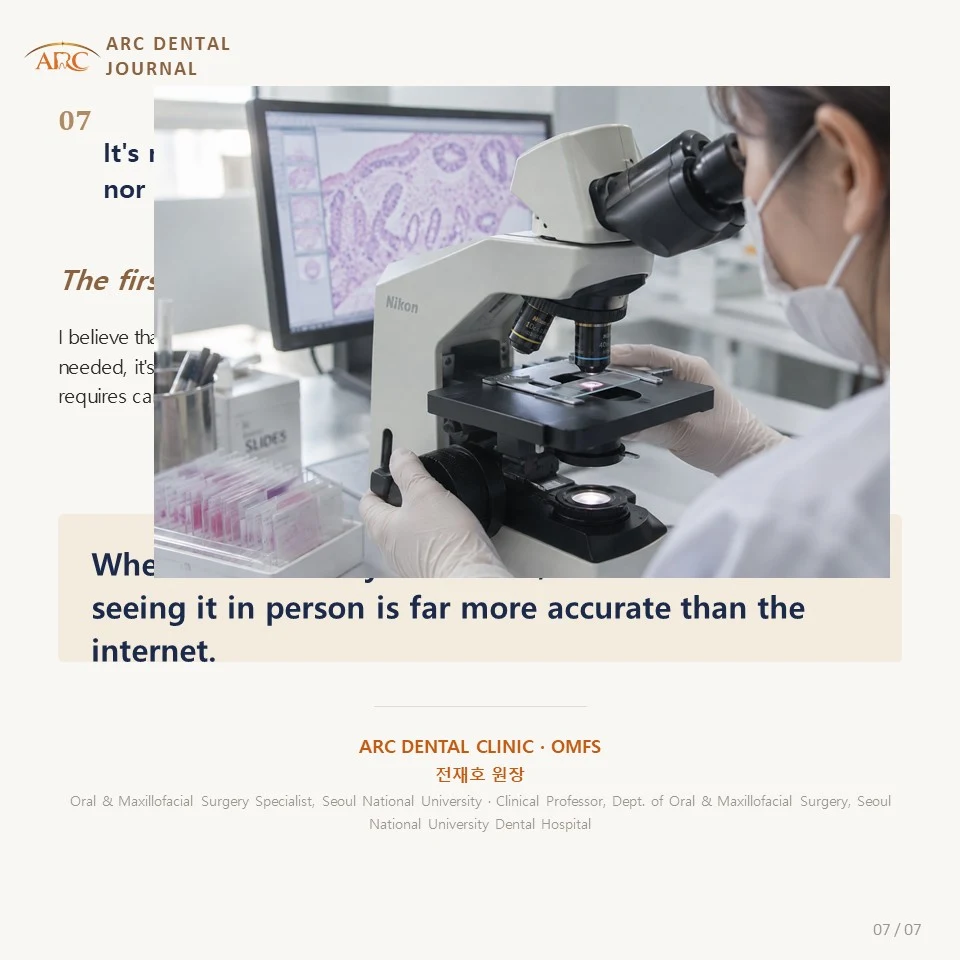
If you looked in the mirror today and saw something on your tongue, gum, or inside your cheek, there is no need to immediately worry about oral cancer. But if it is “It's been months and it won't go away,” “It seems to be getting bigger,” “It feels hard when I touch it,” or “The same spot keeps hurting,” there is no need to be frightened — and no need to endure it for years either.
Check it, and if it is fine, you can be at ease. If removal is needed, it can be removed. If a biopsy is judged necessary, we can confirm it precisely. And if it is truly a lesion that requires university hospital care, then I will recommend university hospital treatment.
If something appeared in your mouth and the more you search, the scarier the stories get, do not worry alone comparing photos. The inside of the mouth is far more accurately seen directly than on the internet.
Do not worry too much before your visit just because of something on your gum! A lump in the mouth or an oral cyst — ARC Dental Clinic's Oral & Maxillofacial Surgery will look and judge directly.
And, as I always tell my patients — have a happy day today, too!
Jaeho Jeon